Custom Basketball Team Bags: Sizing for Balls, Jerseys and Training Gear
A basketball bag is sized around a size 7 ball, which is about 750 mm in circumference and does not compress. Everything else — jersey, shorts, warm-up top, shoes — fits around that one object. Get the ball carry wrong and the bag is wrong.
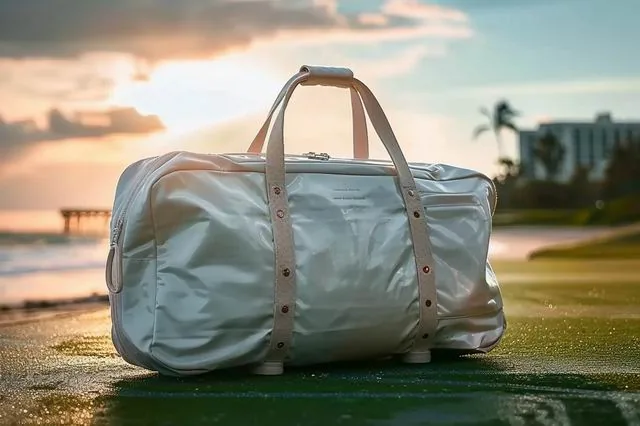
Four objects decide a basketball bag: a size 7 ball, a pair of high-top shoes, a jersey and a warm-up top. Design for all four at once, separate the shoes, and put the ball somewhere it does not distort the panel it sits against.
What Decides the Size of a Basketball Team Bag?
The ball decides it. A size 7 ball is roughly 750 mm in circumference, which is about 240 mm across, and it is inflated, which means it does not compress to fit. Every other item in a basketball kit — jersey, shorts, warm-up top, shooting shirt — is soft and will pack around anything. The ball will not, so the bag is dimensioned from the ball outwards.
Clubs get this wrong by buying for volume instead. A bag with enough litres for a ball will take a ball somewhere in the main compartment, where it sits against the panel and pushes the silhouette out of shape, and where it has to be unpacked to be found. A bag designed for a ball has a shaped pocket or an external holder, and the rest of the kit arranges itself around it.
| Ball size | Circumference | Approximate diameter | Typical age group |
|---|---|---|---|
| Size 5 | 690 mm | 220 mm | Under 12 |
| Size 6 | 720 mm | 229 mm | Under 14, women |
| Size 7 | 750 mm | 240 mm | Men, 15 and over |
| Size 7, match ball | 750 mm | 240 mm | All senior squads |
Internal Ball Pocket or External Ball Holder?
An internal shaped pocket keeps the silhouette clean and protects the ball from the weather, but it consumes a fixed slice of the main volume whether or not the ball is in it. An external holder leaves the whole interior for kit and makes the ball reachable without opening the bag, but it puts a rigid object on the outside of the bag where it catches on doorways and bus seats.
For a club travelling by minibus, the internal pocket is usually the better call — the ball is protected and nothing snags. For a club that walks from a car park to a court with a ball under one arm anyway, the external holder earns its keep. Where a programme runs both, dimension the pocket to the ball and skip the holder; one silhouette serving two sports is worth more than a feature used twice a season.
Where Do Basketball Shoes Go?
Basketball shoes are the bulkiest footwear in team sport. A high-top pair in a men's size 11 occupies more space than a pair of boots and it carries court dust that marks anything it rubs against. They need their own compartment, they need that compartment to be lined with something wipeable, and they need to be separated from the jersey by a barrier rather than by a fold of fabric.
| Shoe option | Volume taken | Marks the jersey | Dries in transit | Club verdict |
|---|---|---|---|---|
| Separate lined end pocket | Fixed | No | Partly | The standard answer |
| External shoe pocket | Outside the bag | No | Yes | Best for wet climates |
| Sealed wet compartment | Fixed | No | No | Works, but holds damp |
| Loose in the main compartment | None | Yes | Yes | The complaint clubs report |
| Loose shoe bag supplied separately | None | No | Yes | Works, but gets separated |
How Much Space Does the Rest of the Kit Need?
Once the ball and the shoes have their places, the remaining kit is modest: a jersey, a pair of shorts, a warm-up top and socks, plus a water bottle and a towel. That is roughly 25 litres of soft kit, and the common mistake is to specify far more than that. An over-sized basketball bag gets filled with things that do not belong in it, and then it gets carried overloaded, which is where strap roots fail.
The useful discipline is to design to the kit list and not to the maximum plausible load. A bag sized for the list plus a small margin stays the right shape, closes properly and survives being carried by the strap. A bag sized for everything a player might conceivably bring will be over-loaded within a month of the season starting.
What Should the Strap Specification Say?
Basketball bags are carried on the shoulder across a concourse and down a corridor, and they are carried loaded. The strap therefore carries the whole weight repeatedly, and the strap root is the point that fails. The specification should name the webbing width and material, the padding, the adjustment hardware, the reinforcement patch behind the root and the stitch type — and it should ask for the assembled joint to be evidenced rather than the webbing alone.
- Webbing width and material, named as a specification and not as a colour.
- Reinforcement patch behind the strap root, dimensioned on the drawing.
- Bar-tack or box stitch at the root, named to ASTM D6193.
- Adjustment hardware in a common size, so a replacement exists.
- Seam strength evidenced on the assembled joint to ISO 13934-1.
How Does Colour Work on a Basketball Programme?
Basketball clubs run more colourways than most sports — home, away and often a third kit — which multiplies the exposure to MOQ 500 pcs per style and colourway. Three colourways is three minimums unless the programme is planned as one production slot with all three booked together. Clubs that understand this consolidate: one shell colourway, with the second and third colours carried in trim, binding and print.
The colour approval is the same discipline as any club kit — one reference, one coupon per substrate, approval under a single light — and on a basketball bag the substrate list is short, because the panels are large and flat and the trim is minimal. That makes it the easiest sport in the cluster to keep on colour. The method is set out in Reorder colour consistency.
| Programme choice | Colourways | Minimum exposure | Reorder complexity |
|---|---|---|---|
| One shell, trim carries the second colour | One | MOQ 500 pcs, one slot | Low |
| Two shell colourways | Two | Two minimums, one slot | Moderate |
| Three shell colourways | Three | Three minimums, one slot | Higher |
| Two silhouettes, one colourway | One | Two minimums, one slot | Moderate |
What Does a Basketball Bag Need for Travel?
Travel is where a basketball bag is tested. Unlike a cricket bag, it is rarely wheeled — it is carried, stacked in a bus hold and pulled out by the strap. That means the base takes abrasion from the hold floor, the corners take knocks from other bags, and the strap takes the full load every time it is lifted out by one handle.
The specification answer is a coated or heavier base panel, bound corners, and a strap attachment that is tested as an assembly. All three are modest in unit terms and all three are the difference between a bag that lasts a season and one that lasts four. The abrasing evidence to ask for is an ISO 12947 result on the base fabric, and the seam evidence is an ISO 13934-1 result on the assembled joint.
How Is Personalisation Laid Out on a Basketball Bag?
Personalisation is simpler here than in most sports because the panels are large. A player number on the end panel, a surname above it, and a club crest on the side panel — three positions, three methods, all measured from a seam. The number needs to be legible from across a concourse, which usually means a minimum cap height of 60 mm for a two-digit number and a little less for a three-digit one.
Personalisation fields to fix before a basketball order is quoted
- Crest: vector artwork with the colour references named, positioned by measurement.
- Number: method, position, cap height and the number range as a file.
- Surname: method, position, and the list as a file rather than as prose.
- Role or age-group tab: whether it is a woven tab or a print.
- Spare plain units held back for late joiners, ordered with the main lot.
What Should a Club Check on the Sample?
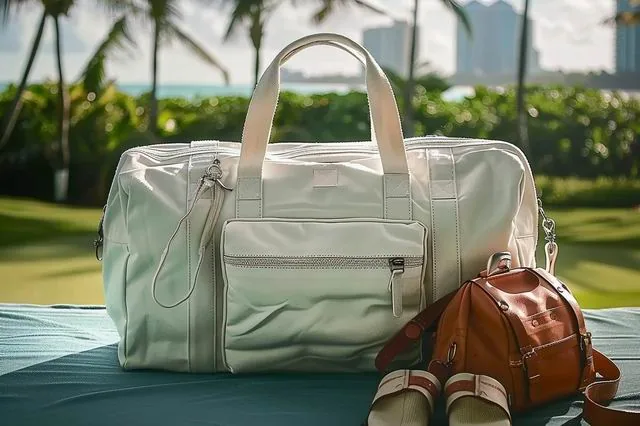
Load it. A basketball sample should be checked with an inflated size 7 ball in its pocket, a pair of high-top shoes in the shoe compartment and the full kit list in the main volume, and it should then be closed, carried by the strap and set down. Three questions decide it: does it close, does it hold its shape, and can the ball be reached without unpacking.
The second check is the crest panel. An embroidered crest on a panel without an interlining will pucker, and the pucker is permanent. Press the panel flat from the inside on the sample and look at it from an angle — if the embroidery distorts the surface at all, the panel needs stiffening, and that is a change worth making before bulk rather than after.
How Does the Order Plan Around a Basketball Season?
Basketball seasons run across the winter, which means the production window sits in the autumn and collides with the peak that every other winter sport also wants. The practical consequence is that the enquiry has to be raised earlier than a club intuitively expects, because the constraint is not the factory calendar alone but the shared dye-house and trim schedule behind it.
Sampling runs 6-10 working days from a signed-off tech pack, extending to 12-15 working days where a new club colour is being matched. Bulk runs 35-50 days from written sample approval, inspected at AQL 2.5 under ISO 2859-1 and shipped FOB Xiamen on T/T 30/70. Work backwards from the first fixture and the date is arithmetic. The reasoning is set out in Why 35 to 50 days.
What Does the Programme Cost to Run Well?
The cost of a basketball programme is dominated by three things: the number of colourways, the personalisation count and the quantity. Silhouette complexity is a distant fourth. A club that consolidates colourways, supplies the number list as a file and orders once with a float will spend less than a club that orders three colourways in two drops and personalises twice.
The second cost lever is the reorder. A programme that keeps its coupon set and its dye-lot record can reorder at 300 pcs rather than the standard MOQ 500 pcs, which is the single largest saving available to a club that runs an annual cycle. It costs a sheet of paper and a signed set of coupons to earn.
What Goes Into the Enquiry?
Six fields, and a basketball enquiry is complete. The sport is unusual in that the ball, the shoes and the kit list are all known in advance, so a club that supplies them gets a costed programme rather than a round of questions.
- Ball size used by the programme, and whether the carry is internal or external.
- Shoe compartment preference: lined end pocket, external or sealed.
- The kit list, with the bulkiest item identified.
- Colourway count and whether the second colour can be carried in trim.
- Personalisation: crest, number, surname, and the files that go with them.
- Quantity split and the date the kit has to be in the changing room.
How Is a Reorder Kept Identical?
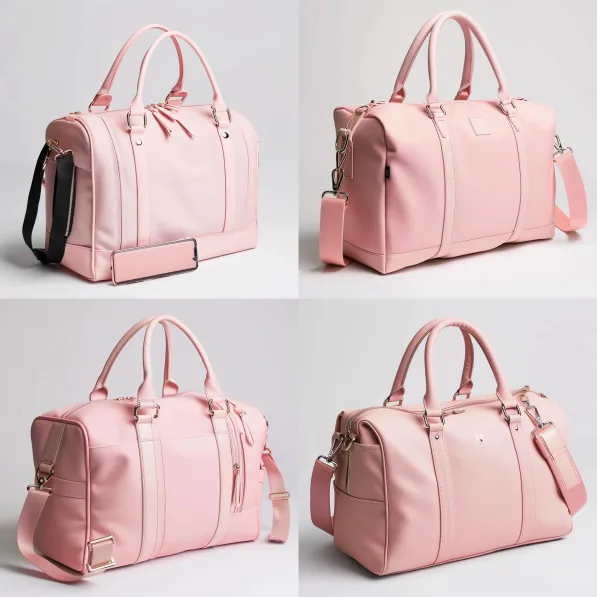
By holding four artefacts: the reference, the coupon set, the dye-lot record and the shade band. Basketball is the easiest sport in which to do this because the substrate list is short, but the discipline is identical. A club that holds the four artefacts and reorders from the same lot will get the same colour; a club that reorders from memory will get a shade argument in November.
Where the quantity is lower than the standard minimum, 300 pcs is open to discussion on a repeat — but only where the artefacts exist, because a lower quantity with no reference is a fresh colour-matching exercise and the saving disappears in sampling time. The full method is set out in Reorder colour consistency.
What Fails First on a Basketball Bag?
Three things, in order: the strap root, the base corner and the zip at the shoe compartment. All three are specification points and all three are preventable with one clause each. The strap root wants a reinforcement patch and a named stitch; the base corner wants a binding or a moulded foot; the shoe compartment zip wants a gauge and a brand-equivalent named, because it is the zip that is operated with the bag full and it is the zip that gets forced.
None of that is exotic. It is a tech pack with four extra lines on it, and those four lines are the difference between a club that reorders for four years and a club that changes supplier after one season.
What Does the Zip Specification Need to Say?
A basketball bag has two zips that matter and one that gets forced: the main compartment zip, the shoe compartment zip and, where the ball pocket is external, that one. The main zip is operated with the bag lying open; the shoe zip is operated with the bag full, which is exactly the condition in which a zip is forced and a slider is broken. That makes the shoe compartment zip the one worth specifying properly.
Four fields cover it: gauge, type, slider and puller, plus the tape colour. Gauge and type decide whether it survives being forced; the slider decides whether it can be replaced; the puller decides whether a player in a hurry can find it; and the tape colour decides whether it sits inside the approved coupon set. Naming a brand-equivalent is acceptable; naming nothing at all is not.
How Does a Club Handle Tournament Travel?
Tournament travel changes the requirement in one specific way: the bag is carried further, stacked harder and opened more often. A club playing three matches in a day needs the ball reachable without unpacking and the wet kit separated from the dry kit between matches, because there is no opportunity to dry anything.
The specification answer is the same two features the season needs, executed properly: a shaped ball pocket and a drained wet compartment. It is not a bigger bag. Clubs that respond to tournament travel by over-sizing produce bags that get over-filled and fail at the strap, which is the opposite of the outcome they wanted.
How Should the Club Store the Bags Between Seasons?
Off-season storage destroys more club kit than the season does. Bags put away damp grow mould in the lining, bags stacked under weight flatten the padding permanently, and bags stored in direct sunlight fade unevenly, which the club discovers the following August as a colour mismatch that is not a dye problem at all.
The instruction is simple enough to go on a label: empty, dry, store open and out of direct sunlight. It costs nothing, it prevents the most common off-season complaint, and it keeps the retained reference meaningful — because a club that stores one bag badly and then uses it as its colour reference has corrupted the reference rather than the bag.
Send the ball size and the kit list
Tell us the ball size, the shoe arrangement and the colourway count, and we come back with a costed programme and a delivery date you can calculate.
Frequently Asked Questions
What size ball should the bag be designed for?
The largest ball the programme uses. A size 7 is about 240 mm across and does not compress.
Should the ball go inside or outside the bag?
Inside for a club travelling by bus, where nothing can snag. Outside for a club walking from a car park with the ball in hand anyway.
Why do basketball shoes need their own compartment?
They are the bulkiest footwear in team sport and they carry court dust that marks a jersey.
How many colourways should a club run?
One shell colourway wherever possible, with the second colour in trim. Each shell colourway carries its own MOQ 500 pcs.
What is the minimum order?
MOQ 500 pcs per style and colourway, with 300 pcs open to discussion on a repeat.
How long does sampling take?
6-10 working days from a signed-off tech pack, extending to 12-15 working days where a new club colour is being matched.
How long is bulk production?
35-50 days from written sample approval, inspected at AQL 2.5 under ISO 2859-1.
Which standards apply?
ASTM D6193 for stitches and seams, ISO 13934-1 for tensile behaviour and ISO 12947 for abrasion on the base panel.
Does the crest panel need stiffening?
Yes. An embroidered crest on an unlined panel will pucker, and the pucker is permanent.
How big should a player number be?
A cap height of around 60 mm for a two-digit number, legible from across a concourse.
What fails first on a basketball bag?
The strap root, then the base corner, then the zip at the shoe compartment.
Can a reorder be kept identical?
Yes, if the reference, the coupon set, the dye-lot record and the shade band all survive the handover between seasons.
People Also Ask
How do you size a basketball team bag?
From the ball outwards: a size 7 ball first, then shoes, then soft kit.
Where should basketball shoes go?
In a separate lined compartment, with a barrier between them and the jersey.
Should the ball be carried inside or outside?
Inside for bus travel, outside where the club walks to the court.
How many colourways should a club run?
One shell colourway, with the second colour carried in trim.
What fails first on a basketball bag?
The strap root, the base corner and the shoe compartment zip.
Sources and further reading
Every figure on this page is either our own programme data or attributed below. Open the originals before you write them into a specification.
- FIBA — official basketball equipment and size specificationsFIBA
- ASTM D6193 — Standard Practice for Stitches and SeamsASTM International
- AATCC 16 — Colorfastness to LightAmerican Association of Textile Chemists and Colorists