Custom Baseball Team Bags: Bat Carriers and Catcher Gear Storage
Baseball produces two objects that defeat a general bag: a bat, which is rigid and long, and catcher gear, which is bulky, rigid and heavy. A team bag for baseball is designed around those two, and the rest of the kit arranges itself around them.
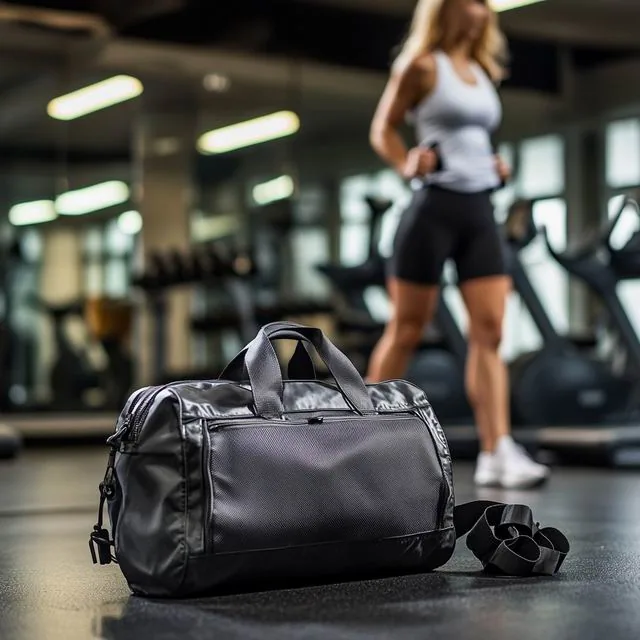
Two objects govern a baseball bag: the bat and the catcher gear. The bat needs a shaped carrier with the barrel supported; the catcher gear needs volume, a stiff base and a strap that was specified for the weight. Everything else is soft kit and it will fit around both.
What Makes a Baseball Bag Different from a General Kit Bag?
Baseball generates equipment that is rigid, and rigid equipment does not pack. A bat is around 840 mm long, a catcher's mask is a rigid cage, and a chest protector is a shaped shell. Three items, none of which compress, and all of which have to arrive at the ground in the condition they left it.
That is a different design problem from a football or basketball bag, where everything is soft and the challenge is separation rather than shape. A baseball bag is therefore specified by object: where does the bat go, where does the mask go, where does the protector go, and what is left over for the soft kit.
| Item | Rigid or soft | Approximate size | Design consequence |
|---|---|---|---|
| Bat | Rigid | 840 mm long | A shaped carrier, barrel supported |
| Catcher mask | Rigid cage | 280 x 250 mm | A compartment that does not compress it |
| Chest protector | Semi-rigid shell | 450 x 400 mm | Volume at the top of the bag |
| Shin guards | Rigid pair | 400 mm each | A long pocket or an external strap |
| Glove | Semi-rigid | 300 mm | A pocket that does not crush the pocket of the glove |
| Cleats | Soft but dirty | Variable | Separation from the jersey |
How Should a Bat Carrier Be Specified?
Two bats is the usual requirement, and the carrier has to hold them without letting the barrels knock together. That means individual sleeves rather than one shared pocket, and it means the sleeve has to be deep enough that the bat cannot work its way out when the bag is carried vertically.
The second point is support. A bat carried barrel-down puts its whole weight on the closed end of the sleeve, and that end fails. A bat carried handle-down is easier to lift out but puts the barrel at the bottom where it takes the impact of the bag being set down. Most baseball bags carry handle-up with a reinforced sleeve bottom, and that is the arrangement worth specifying.
External Sleeves or an Internal Bat Compartment?
External sleeves are the standard on a baseball bag, for a practical reason: the bats are needed at the plate and the bag is left in the dugout. An external sleeve lets a player take a bat without opening the bag, and it keeps two wet or muddy bats out of the main volume entirely.
An internal compartment produces a cleaner silhouette and it protects the bats in transit, which matters for a club travelling by bus. It also means the bats are inside a volume with the catcher gear, which is a lot of rigid objects in one space. Where a club carries more than two bats, the answer is a separate bat bag rather than a larger team bag.
Where Does Catcher Gear Go?
Catcher gear is the reason a baseball bag is heavy. A mask, a chest protector, shin guards and a mitt together approach 6 kg, and that weight is carried on the strap or dragged on wheels. It is also bulky in a way that fills a bag from the inside out, so the catcher's kit dictates the volume of the bag more than the player's kit does.
Two arrangements work. A dedicated catcher bag, which is the honest answer for a club with a full-time catcher and which usually runs on wheels. Or a team bag with a shaped top compartment sized to the chest protector, which works where the catcher's kit travels with the rest. What does not work is a bag sized for a player's kit with the catcher's gear added on top.
| Catcher gear arrangement | Weight carried | Works for | Does not work for |
|---|---|---|---|
| Dedicated wheeled catcher bag | About 6 kg | A club with a full-time catcher | A club that wants one silhouette |
| Shaped top compartment in the team bag | About 6 kg | Clubs where kit travels together | A heavy load carried far |
| External straps for shin guards | Distributed | Short walks from the car | Bus travel, where straps snag |
| Gear loose in the main volume | About 6 kg | Nothing | Anything — it crushes the soft kit |
How Heavy Is a Loaded Baseball Bag and What Does That Do to the Strap?
A loaded baseball bag with catcher gear is one of the heaviest items in club sport, and the strap is the part that fails. Two clauses prevent it: a reinforcement patch behind the strap root with a bar-tack or box stitch named to ASTM D6193, and webbing wide enough to carry the load without cutting into a shoulder.
The second clause is the base. Six kilograms of rigid gear sitting on a soft base will deform it, and a deformed base puts load into the side seams. A stiff base board is not an optional extra on a baseball bag; it is the difference between a bag that holds its shape and a bag that sags by the middle of the season.
Should a Baseball Bag Have Wheels?
For a catcher bag, yes. For a player bag, usually not. A player's kit is soft and moderately heavy, and a wheeled bag is a bigger, heavier bag that still has to be lifted into a bus hold. A catcher's kit is heavy and rigid, and a wheeled bag converts an uncomfortable carry into a pull.
- Player bag: carried, with a wide padded strap and a reinforced root.
- Catcher bag: wheeled, with a stiff base board and a folding handle.
- Bat bag: carried, short and rigid, with the barrels supported.
- Wheel specification: diameter, axle, housing and base board, all named together.
- Spare wheel and axle availability, asked for at quotation rather than at failure.
What Does the Cleat Compartment Need?
Cleats carry dirt and, on a metal-studded pair, they are abrasive. They need their own compartment, they need it lined with something wipeable, and they need to be separated from the jersey by a barrier rather than by a fold of fabric. A drain at the lowest point is worth having wherever the club plays on a damp field, because a wet cleat compartment that cannot drain becomes the smell in the dugout.
The second requirement is position. A cleat compartment at the end of the bag, opening externally, keeps the dirt out of the main volume and lets a player change without opening the whole bag. That is worth more than an extra internal pocket, and it is a decision made at the pattern stage.
How Does Colour Work on a Baseball Programme?
Baseball clubs usually have a strong colour identity — a cap colour, a jersey colour and often a pinstripe — and the bag has to sit beside all three. The reference should be chosen from the cap or the dominant jersey colour rather than from the pinstripe, because a stripe is too small a field to match against and it will read differently on a woven shell.
The approval is the standard discipline: one reference, a coupon per substrate, approval under one light, and a recorded dye lot. Baseball is kinder than most sports here because the panels are large and flat and the trim is minimal, which means fewer substrates to drift. The method is set out in Reorder colour consistency.
| Substrate | Drift risk | Why | What to insist on |
|---|---|---|---|
| Shell fabric | Moderate | Piece-dyed, one lot per order | A physical coupon and a lot number |
| Embroidery thread | High | A different dye house and a different fibre | A coupon matched to the reference, not to the shell |
| Webbing and binding | Moderate | Bought in, matched visually | A coupon in the same approval session |
| Zipper tape | Moderate | Usually a stock colour | Stated as a requirement rather than assumed |
| Cap panel, if printed | High | Print sits on the surface | Approved beside the shell under daylight |
What Should the Tech Pack Say About a Baseball Bag?
Six fields, and most of them are about the two rigid objects. A baseball tech pack that describes volume and colour only will produce a bag that does not fit a bat.
Tech pack fields for a baseball team bag
- Bat carrier: number of sleeves, internal length and how the barrel is supported.
- Catcher gear: whether it is a dedicated bag or a shaped compartment, and its dimensions.
- Cleat compartment: position, lining and whether it drains.
- Base: board thickness and material, plus corner protection.
- Strap: webbing width, padding, reinforcement patch and stitch type to ASTM D6193.
- Colour references for shell, trim, webbing, tape and thread.
How Is the Sample Judged?
With the gear in it. A baseball sample should be loaded with two bats in their sleeves, a full catcher's kit where the bag is designed for it, cleats, a glove and a jersey — and then closed, carried and set down. Four questions decide it: does it close, does the bat stay in the sleeve when it is carried upright, does the base hold its shape under the catcher gear, and can the cleats be reached without opening everything.
The colour check happens outdoors beside a cap or a jersey. A baseball bag approved indoors and approved without the cap beside it has been approved under the wrong conditions, and the club will find out on opening day.
How Does the Season Calendar Drive the Order?
Baseball seasons start in the spring in most markets, which puts the production window in the winter — and the winter window contains a shutdown that clubs routinely forget to plan around. Working backwards from opening day: bulk is 35-50 days from written sample approval, sampling is 6-10 working days from a signed-off tech pack, and the shutdown sits inside whichever window it falls in.
The practical consequence is that a club wanting kit for a spring opener has to have raised the enquiry in the previous autumn, before the shutdown, or immediately after it. A club that raises it in January is asking for the same window every other spring sport wants. The calendar reasoning is set out in Why 35 to 50 days.
What Does the Inspection Criteria Need to Include?
Six checks, written by the club and agreed before inspection: bat sleeve internal length and count, cleat compartment lining and drain, base board presence, stitch type at the strap root, colour against the approved coupon set, and crest position measured from a seam. Classified as major defects, those six are enforceable at the Ac/Re decision.
The inspection itself runs at AQL 2.5 under ISO 2859-1, General Inspection Level II. The sampling arithmetic is set out in AQL 1.5 versus 2.5, and the club-specific checks are what make the standard useful — a generic inspection will pass a bag with the wrong sleeve length.
What Goes Into the Enquiry?
Six fields, and a baseball enquiry is complete. The two that change the quotation most are the bat count and whether catcher gear travels in the same bag.
- Number of bats to be carried, and the longest bat length in the squad.
- Whether catcher gear travels in the player bag or in a dedicated bag.
- Cleat compartment: end-opening, lined, and whether it drains.
- Colour references for shell, trim, webbing, tape and thread.
- Quantity split by style and colourway, and the reorder expectation.
- The date the kit has to be at the ground, working backwards from opening day.
What Does a Baseball Programme Cost to Run?
The two costs that matter are silhouette count and colourway count. A club running a player bag and a catcher bag is running two minimums at MOQ 500 pcs each; a club that consolidates to one bag with a shaped catcher compartment runs one. Where the catcher's kit genuinely needs its own bag, the saving comes from ordering both in one production slot.
The second lever is the reorder. A programme that holds the reference, the coupon set, the dye-lot record and the shade band can reorder at 300 pcs rather than the standard figure, and it gets the same colour. A programme without them re-develops every year and pays for it in sampling time as well as in quantity.
How Is the Programme Kept Stable Across Seasons?
With the same four artefacts every club programme uses. Baseball clubs are better at this than most, because the equipment is expensive enough that a club tends to keep records — but the records kept are usually about the equipment rather than about the bag.
A one-page programme record fixes that: the reference and its library, the substrate list, the coupon set, the dye-lot history, the tech pack revision number and the reorder date. One page, held by the club, updated once a year.
How Does a Club Handle Shared Equipment?
Baseball generates more shared equipment than most sports: a bucket of balls, a batting tee, a set of helmets and the catcher gear. None of it belongs in a player bag, and all of it gets put in one when no separate arrangement exists. That is how a bag designed for a player's kit ends up carrying a bucket.
The answer is one or two shared bags specified for the equipment, in the same colourway and ordered in the same slot. A ball bag wants volume and a rigid base; a helmet bag wants separation so the shells do not mark each other. Both are simple, both are unpersonalised beyond a crest, and both stop the player bag from being asked to do a job it was not designed for.
How Does Club Storage Affect the Specification?
Baseball clubs store kit in a dugout, a shed or a container, and all three are harder on a bag than a changing room is. Storage that is damp, hot or rodent-accessible changes the material specification, because a bag that lives in a shed will see conditions no changing room produces.
Where storage is damp, a coated base and a drained cleat compartment matter more; where it is hot, the coating matters more, because a coating that cracks in heat will crack in a shed long before it cracks on a pitch. Naming the storage condition on the enquiry is a simple way to get a material specification that survives it.
What Fails First on a Baseball Bag?
The bat sleeve bottom, the strap root and the base corner, in that order. The sleeve bottom takes the weight of a bat carried upright; the strap root takes six kilograms of catcher gear; the base corner takes the impact of a loaded bag being set down on a dugout floor.
All three are prevented by one clause each — a reinforced sleeve bottom, a reinforcement patch and a named stitch, and corner protection. None of them is exotic, and all three are the difference between a bag that lasts a season and one that lasts four.
Send the bat count and the catcher arrangement
Tell us how many bats, whether catcher gear travels with the kit, and the date it has to be at the ground, and we come back with a costed programme you can plan around.
Frequently Asked Questions
How many bats should a baseball bag carry?
Two, in individual sleeves so the barrels cannot knock together. More than two is a separate bat bag rather than a larger team bag.
Should the bat be carried handle-up or barrel-down?
Handle-up with a reinforced sleeve bottom. Barrel-down puts the whole weight on the closed end of the sleeve, and that end fails.
Does catcher gear need its own bag?
It needs either a dedicated wheeled bag or a shaped compartment sized to the chest protector. It does not work loose in the main volume.
Should a baseball bag have wheels?
For a catcher bag, yes. For a player bag, usually not — the kit is soft and the wheeled bag still has to be lifted into a bus hold.
Where should cleats go?
A lined end compartment that opens externally and drains. Metal studs abrade a light lining in a season.
What is the minimum order?
MOQ 500 pcs per style and colourway, with 300 pcs open to discussion on a repeat.
How long does sampling take?
6-10 working days from a signed-off tech pack, extending to 12-15 working days for a complex build or a new club colour.
How long is bulk production?
35-50 days from written sample approval, inspected at AQL 2.5 under ISO 2859-1.
Which standards apply?
ASTM D6193 for stitches and seams, ISO 13934-1 for tensile behaviour and ISO 12947 for abrasion on the base panel.
Which colour should the reference come from?
The cap or the dominant jersey colour. A pinstripe is too small a field to match against.
When should a club order for a spring opener?
In the previous autumn, before the winter shutdown, or immediately after it. Bulk is 35-50 days on top of sampling 6-10 working days.
What fails first on a baseball bag?
The bat sleeve bottom, then the strap root, then the base corner.
People Also Ask
How do you size a baseball team bag?
By object: the bat, the catcher gear and the cleats, in that order.
Should a baseball bag have wheels?
Yes for a catcher bag, usually not for a player bag.
Where should cleats go?
A lined, drained end compartment that opens externally.
How many bats should a bag carry?
Two in individual sleeves. More than two needs a separate bat bag.
When should a club order for a spring season?
In the previous autumn — bulk is 35-50 days plus sampling 6-10 working days.
Sources and further reading
Every figure on this page is either our own programme data or attributed below. Open the originals before you write them into a specification.
- ASTM D6193 — Standard Practice for Stitches and SeamsASTM International
- YKK fastening products — size charts and specification dataYKK Corporation
- AATCC 16 — Colorfastness to LightAmerican Association of Textile Chemists and Colorists