What Makes a Hybrid Backpack Camera Bag Work?
Three things decide it: the camera module has to come out without unpacking the bag, the harness has to move the load onto the hips rather than the shoulders, and the kit has to be reachable without setting the pack down.
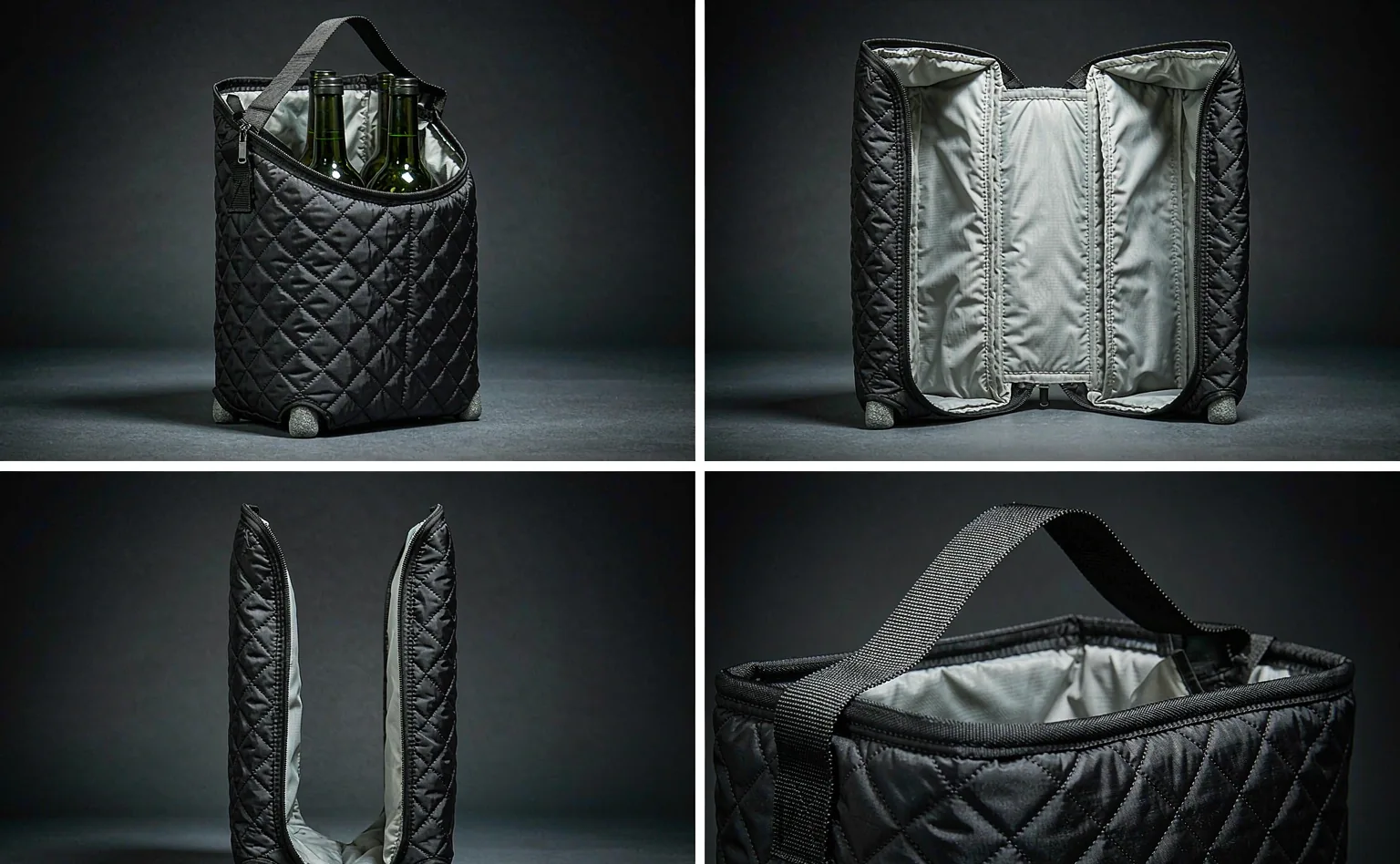
A hybrid carries a removable camera module in the lower half of the pack and personal kit in the upper half, with the heavy gear sitting close to the wearer back and high on the spine. Three things decide whether it works: the module has to come out without unpacking the whole bag, the harness has to carry the load on the hips rather than the shoulders, and the camera compartment has to be reachable without setting the bag down. Get those right and it replaces two products; get any one wrong and the user buys two bags.
A hybrid is a backpack with a structured camera compartment, and it exists because a photographer who is also a person needs to carry a jacket, a laptop, a water bottle and lunch alongside the kit. The product is genuinely useful and it is genuinely difficult to build, because the two halves want contradictory things: the camera half wants structure, padding and a fixed layout, and the personal half wants volume and compressibility.
Most hybrids fail on one of three things and they are all specification failures rather than manufacturing ones. The module is not removable, so the bag cannot be used as a plain pack. The harness is a laptop-pack harness, so a 4 kg load sits on the shoulders. Or the camera compartment is only reachable through the top, so the user has to unpack the sandwich to reach the lens.
What Is a Hybrid Camera Backpack?
Three constructions exist and they are different products. A dedicated hybrid has a permanent padded camera compartment in the lower half and a general compartment above. A modular hybrid has a removable camera insert that occupies the lower half and can be lifted out, leaving a general pack. A convertible hybrid has a divider system that can be folded away entirely, turning the whole volume into one compartment.
The modular construction is the most useful and the most expensive, because it is two products joined: a pack and an insert, each with its own pattern, its own foam and its own closure. The convertible is the lowest in cost and the least protective, because a divider that folds away is a divider that does not hold. A programme should choose the construction before anything else, because everything follows from it.
| Construction | Protection | Versatility | Cost | Best for |
|---|---|---|---|---|
| Dedicated: a permanent camera compartment | Best of the three | Lowest: the camera space is always there | Middle | Users who always carry the kit |
| Modular: a removable camera insert | Good, if the insert is a real insert | Highest: two products in one | Highest of the three | Users who sometimes leave the kit at home |
| Convertible: dividers that fold away | Lowest, because the dividers do not hold | High on volume, low on restraint | Lowest of the three | Travel ranges where the kit is small |
| Camera compartment plus a separate front pocket | Good for the kit, poor for access | Moderate | Middle | Rarely the right answer; the kit ends up too far from the back |
How Should the Load Be Split Between the Two Compartments?
Heavy items go close to the wearer back and high on the spine, and light bulky items go low and far. That is the whole rule and it is counter-intuitive to most first designs, which put the camera compartment at the bottom because it is heavy and the sandwich at the top because it is light. The correct answer is the camera module in the middle-to-lower back panel position, close to the spine, and the light bulky items below and outside it.
The reason is leverage. A mass held far from the back applies a moment that the harness has to resist with the shoulders, and the same mass held against the back is carried largely by the hips through the hip belt. On a 4 kg kit that difference is the difference between a pack that is comfortable for two hours and one that is not.
Where Does the Camera Compartment Go?
Against the back panel, occupying the lower two thirds of the height, and separated from the personal compartment by a structured panel rather than by a fabric divider. The panel is load-bearing: it carries the camera module load into the frame and the hip belt rather than letting it hang from the back panel fabric. Without that panel the module sags and the whole pack loses its shape.
The depth of the compartment is set by the kit and it is usually the constraint that decides the pack depth. A body with a 70-200 mm lying down needs about 220 mm of interior depth, which is deeper than most personal-kit compartments need and deeper than a laptop sleeve. That is why hybrids are deeper than the sum of their parts and why they look bulky on a small frame.
Rear Access or Side Access?
Rear access, where the whole back panel opens, is the right answer for a hybrid and the reason is that it exposes the camera compartment without disturbing the personal one. The bag is laid face down, the back panel unzips and folds away, and the module is fully open. Nothing has to come out to reach the lens.
Side access is faster and it is what professionals prefer on a dedicated camera bag, but on a hybrid it is compromised: the side opening has to reach past the personal compartment to get to the module, and the further the module is from that opening the less useful it is. Where a programme wants both, the side opening should serve the top compartment and the rear opening the camera module.
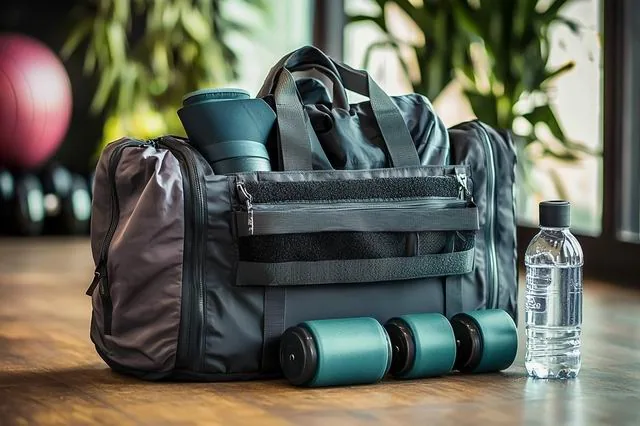
What Does the Harness Have to Do Differently?
A hybrid carries more weight than a laptop pack and less than a trekking pack, and it needs a harness between the two: a padded hip belt that actually transfers load, load lifters at the top of the shoulders, a sternum strap, and a back panel with a structured frame sheet. Laptop-pack harnesses have a token hip belt of 25 mm webbing and no load transfer, and they are the reason hybrids get returned as uncomfortable.
The load transfer is measurable and worth specifying. A hip belt of 75 to 100 mm with a stiffened core, set at the right height on the wearer, should carry most of a 4 kg load on the hips. The test is to wear the loaded pack for a stated period and report where the weight sits; a harness that puts most of it on the shoulders has failed regardless of how it looks.
How Is the Camera Module Removed?
Three systems, in ascending order of usefulness. A hook-and-loop floor, where the module attaches to the pack interior and lifts out. A zippered interface, where the module closes into the pack and unzips from it. And a full separate insert that has its own handle, its own lid and its own closure, and can be carried on its own.
The third is the one users actually want, because it makes the pack a plain pack in five seconds and gives them a small camera bag at the location. It is also the most expensive, because it is a complete second product. Where a programme can only afford the first, the module needs a carry handle and a lid, or it is a tray of dividers that cannot be carried anywhere.
How Is the Interior Dimensioned?
Dimension the camera compartment on the interior, from the kit list, and derive the pack from it. A one-body two-lens kit needs about 250 x 160 x 170 mm of protected interior with 10 mm closed-cell dividers, and a 70-200 mm lying down needs a 15 mm cradle and its own compartment. Those are the figures used across this site for a working kit, and they set the module.
Then dimension the personal compartment from what it has to hold, which is usually a jacket, a water bottle, food and a laptop sleeve. The two compartments do not share dimensions and should not: the module is a fixed, dimensioned box and the personal compartment is a volume. A hybrid whose two compartments were dimensioned as one volume will not hold the kit.
What Happens When Users Overload It?
They will, and the specification has to anticipate it. A hybrid invites overloading because it has volume, and a user who fills the personal compartment to the top has moved the centre of mass away from the back and up, which makes the pack unstable and puts the load back on the shoulders. The design answer is compression straps that pull the load back towards the spine.
The second consequence is on the camera module. A pack stuffed full presses on the module from the outside, compresses the wall foam and reduces the protection the kit was bought for. Where a programme expects the pack to be filled, the module needs a semi-rigid shell of its own, which is another argument for the full insert construction rather than a divider set.
- Construction
- Dedicated, modular with a removable insert, or convertible
- Module interior
- From the kit list; about 250 x 160 x 170 mm for a one-body two-lens kit
- Module position
- Lower two thirds, against the back, over a load-bearing panel
- Interface panel
- Structured, carrying the module load into the frame and hip belt
- Access
- Rear panel opening to the module; a side opening serves the upper compartment
- Hip belt
- 75 to 100 mm with a stiffened core, set at the correct height
- Harness
- Load lifters, a sternum strap and a structured frame sheet
- Module removal
- Hook-and-loop, a zippered interface, or a full separate insert
- Module shell
- Semi-rigid where the pack is expected to be filled to capacity
- Acceptance
- A loaded carry test for a stated period, plus the drop protocol
How Is a Hybrid Tested?
Two tests beyond the usual dimensional and material checks. The first is a loaded carry test: the pack is loaded to its stated capacity, worn for a stated period by a stated number of users, and the load distribution and the comfort are recorded. There is no published method, so the programme writes its own and states what it is measuring.
The second is the drop protocol applied to the module rather than to the whole pack, because the module is the protective product. Face, edge and corner onto a rigid surface with a rigid ballast, three production units, and a limit written in advance. A hybrid whose pack passes a drop and whose module does not has failed, because the module is the part carrying the kit.
What Does It Cost in Weight and Price?
A hybrid costs materially more than a camera bag of the same interior because it is two products: a pack with a harness and a frame sheet, and a padded module with its own foam, dividers and closure. The harness is the expensive part, because a load-transferring hip belt, load lifters and a frame sheet are components a shoulder bag does not have at all.
The weight follows. A hybrid for a one-body two-lens kit runs at about 1.3 to 1.8 kg empty against 700 to 900 g for a shoulder bag of the same interior, and the difference is the harness and the frame. That is acceptable for a product carried on two shoulders and it is why the hybrid earns its place: the same kit on one shoulder for two hours is worse than twice the weight on two.
| Product | Empty weight | Carries | Access | Best use |
|---|---|---|---|---|
| Shoulder camera bag | 700 to 900 g | About 2 kg, one shoulder | Top or side, standing | Short shoots, urban work |
| Sling bag | 700 to 900 g | About 2.5 kg, one shoulder across the torso | Rotates to the front in seconds | Fast access on the move |
| Hybrid camera backpack | 1.3 to 1.8 kg | 4 to 6 kg, two shoulders and hips | Rear panel, bag laid face down | A day out with kit and personal items |
| Dedicated camera backpack | 1.5 to 2.2 kg | 6 to 10 kg, two shoulders and hips | Rear or side | Full kit, no personal items |
| Hard-shell case | 3 to 5 kg | Any, carried by a handle | Latches and a lid | Transport and checked baggage |
What decides a hybrid camera backpack
- Heavy kit close to the back and high on the spine; light bulky items low and far away.
- A modular insert is two products and should be specified and priced as two.
- Rear access reaches the camera compartment without unpacking the personal one.
- A laptop-pack harness cannot carry 4 kg; the hip belt needs a stiffened core of 75 to 100 mm.
- Dimension the module from the kit list and the personal compartment from the volume it holds.
- Test the module, not the pack, because the module is the protective product.
How Do You Write the Specification?
Start with the kit list and the personal list, dimension both, and then decide the construction, because the construction decides whether the two can be separated. Then the module position and the interface panel, then the access, then the harness. A hybrid specified from a volume and a look will fail on all three of the failures listed at the top of this page.
Then write the two acceptance tests: the loaded carry test and the module drop protocol. Both should be in the tech pack before the sample, and both should name who runs them and what happens on a failure. A hybrid is the most complex product in this cluster and it is the one where an unwritten acceptance rule costs the most.
Programme arithmetic: MOQ 500 pcs per style and colourway, sampling 6-10 working days from a signed-off tech pack, and 12-15 for a complex build, which a hybrid with a structured harness is. Bulk production is 35-50 days from written sample approval, inspection at AQL 2.5 under ISO 2859-1 General Inspection Level II, payment T/T 30/70, quoted FOB Xiamen. The harness hardware is the item to decide first.
Send the kit list and the personal list
Send what the pack has to carry in each compartment and the target quantity. You get a construction recommendation, indicative pricing and a sampling window within one business day.
Frequently Asked Questions
What is a hybrid camera backpack?
A backpack with a structured camera compartment, usually in the lower half against the back, and a general compartment for personal kit above it.
Is a removable camera module worth the extra cost?
Yes, if the user will ever leave the kit behind. A full module with its own handle and lid is a second product; a hook-and-loop tray is a tray of dividers that cannot be carried anywhere.
Should the camera compartment be at the bottom of the pack?
It should be low and close to the wearer back, over a load-bearing panel. Heavy items go close to the spine and high; light bulky items go low and far.
Rear access or side access on a hybrid?
Rear access for the camera module, because it opens the compartment without disturbing the personal one. A side opening on a hybrid has to reach past the personal compartment.
How wide should the hip belt be on a hybrid?
Seventy-five to one hundred millimetres with a stiffened core, set at the right height. A laptop-pack hip belt of 25 mm webbing transfers no load.
How much can a hybrid camera backpack carry?
About 4 to 6 kg comfortably, on two shoulders and hips. Beyond that the harness and the frame sheet need to be specified for the load.
Why does my hybrid feel unstable when full?
The centre of mass has moved away from the back and up. Compression straps that pull the load back towards the spine are the design answer.
Does a stuffed pack reduce camera protection?
Yes. A full personal compartment presses on the module from outside and compresses the wall foam, which is an argument for a semi-rigid module shell.
How much does a hybrid weigh?
About 1.3 to 1.8 kg empty for a one-body two-lens kit, against 700 to 900 g for a shoulder bag of the same interior. The difference is the harness and the frame sheet.
How is a hybrid tested?
A loaded carry test for a stated period with the load distribution recorded, plus the drop protocol applied to the module rather than to the whole pack.
Is a hybrid a complex build for sampling?
Yes. A structured harness puts it in the 12-15 working day sampling band rather than the 6-10 day one.
Does a hybrid change the MOQ?
No. MOQ stays at 500 pcs per style and colourway. The harness hardware is what protects the sampling window, because it has to be ordered in.
People Also Ask
What makes a good hybrid camera backpack?
A removable camera module low and close to the back, a harness that moves the load to the hips, and rear access that reaches the kit without unpacking the bag.
Should I get a camera backpack or a hybrid?
A hybrid if personal kit travels with the camera. A dedicated camera backpack if the whole volume is for gear and the load is above about 6 kg.
Can the camera compartment be removed from a hybrid?
On a modular build, yes, and the module should have its own handle and lid so it can be carried separately. On a dedicated build it cannot.
Why is my camera backpack uncomfortable?
Usually a hip belt that transfers no load. A laptop-pack belt of 25 mm webbing leaves the weight on the shoulders regardless of how the pack looks.
How deep does a camera compartment need to be?
About 220 mm of interior depth for a body with a 70-200 mm lying down, which is deeper than most personal compartments and is what makes hybrids look bulky.
Sources and further reading
Every figure on this page is either our own programme data or attributed below. Open the originals before you write them into a specification.
- ISO 2248 — vertical impact test by dropping for filled transport packagesInternational Organization for Standardization
- YKK fastening products — zipper specifications, sizes and careYKK Corporation
- ASTM D3574 — standard test methods for flexible cellular materialsASTM International