How to Fill Out a Commercial Invoice for Bag Exports from China
A commercial invoice is a valuation document first and a payment request second. It is read at entry for the description that supports the code, the origin that drives the duty programme, the Incoterm that fixes where the value starts, and the figure the duty is calculated on. Most delays come from the description field rather than from the numbers.
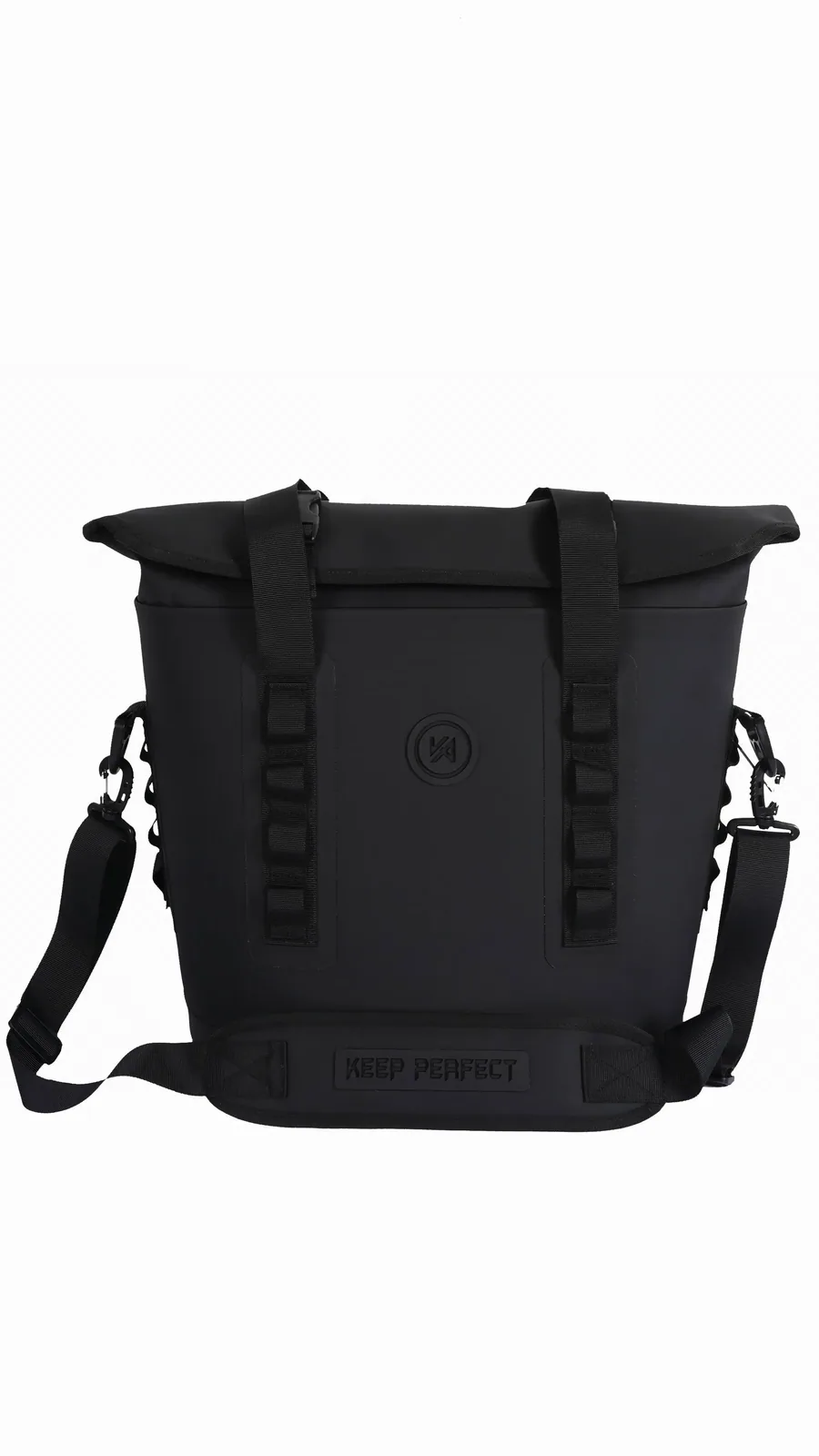
Name the seller and buyer in full, give the invoice number and date, describe the construction rather than the marketing name, state the eight-digit line you are declaring, give quantity, unit price and currency, state the Incoterm with its named place under the Incoterms 2020 rules, state the country of origin rather than the shipping country, and give the weights and carton count. Then make the packing list agree with it.
The invoice is the only document in a bag shipment that travels from the production side to the customs side unchanged, which is why it carries more weight than its length suggests. A broker can correct a typo in a filing; a broker cannot correct a description that does not support the code, because that is a fact about the goods rather than a fact about the paperwork.
What follows is field by field, in the order an officer reads them rather than in the order they appear on a template.
What Does the Description Field Actually Have to Say?
Enough to let a reader decide whether the declared code is right without seeing the goods. That means the article in the words of the heading, the outer surface material with its finish, the construction, and the intended use. "Insulated food or beverage bag, 600D polyester outer surface, foam core, welded PEVA lining, for grocery delivery" is a description. "Cooler bag, style CB-19, navy" is a catalogue entry.
The second formulation is what causes queries, and it is worth being blunt about why: the officer has a code and a description in front of them and no sample. Where the description does not let them confirm the code, the conservative response is to ask, and the answer takes days.
Which Code Goes on the Invoice?
The one you are declaring. In the United States that is the eight-digit line; in the European Union, the United Kingdom, Australia and the Gulf states it is the national line the entry will be made on. Where a shipment goes to several markets, the invoice for each destination carries that market line.
A four-digit or six-digit code on an invoice is not wrong, it is incomplete, and it forces whoever files the entry to complete it. That is the moment at which a classification that was never written down gets invented by someone working to a deadline.
| Field | What a customs officer reads | Common failure |
|---|---|---|
| Seller and buyer, full legal names | Who is responsible for the value | A group name with no entity and no address |
| Invoice number and date | Whether this is the value declared at entry | A pro-forma reused as a commercial invoice |
| Description and construction | Whether the HS code on the entry is supported | "Bag" with no outer-surface material and no construction |
| HS or HTS code | The line the entry is filed against | A four-digit code where an eight-digit one is required |
| Quantity, unit price, currency | The transaction value | A blended price that hides packing or tooling |
| Incoterm and named place | Where the value starts and stops | FOB with no named port; Incoterms 2010 wording in a 2026 contract |
| Country of origin | Which duty programme applies | Ship-from country written as origin |
| Net weight, gross weight, carton count | Whether the manifest matches | Estimated weights that never get corrected |
What Belongs in the Value and What Does Not?
The transaction value is the price actually paid or payable for the goods. To it belong the statutory additions where they are not already in the price: packing costs, selling commissions, assists, royalties or licence fees payable as a condition of sale, and the proceeds of subsequent resale that accrue to the seller.
Outside it, in the American system, sit the international freight and insurance where they are separately identified, and the costs that begin after the goods leave the place of export. In a CIF market those same costs come back inside the customs value, which is why an invoice that breaks them out separately is useful everywhere: it lets each market build its own base from the same document.
| Element | In the transaction value? | Why |
|---|---|---|
| Price of the goods | Yes | It is the price paid or payable |
| Packing and export cartons | Yes | A statutory addition |
| Tooling supplied free by the buyer | Yes, as an assist, if not in the price | Something of value supplied to the seller |
| Royalty payable as a condition of sale | Yes, if not in the price | A condition of the sale |
| International freight | No in the US, yes in a CIF market | The base differs by market |
| Marine insurance | No in the US, yes in a CIF market | The base differs by market |
| Inland delivery in the destination | No | Costs after the place of introduction |
How Should Origin and the Incoterm Be Written?
Origin is the country where the goods became what they are, which for a bag made in China is China regardless of where the vessel sails. The shipping country, the port and the seller location are different facts and belong in their own fields. Writing the port of loading in the origin field is one of the most common errors on a first shipment.
The Incoterm needs its named place under the Incoterms 2020 rules: FOB Xiamen, not FOB China and not FOB. The named place is where risk and cost divide, and it is also the reference point for the value. Where the term is CIF or a delivered term, the invoice has to show what part of the figure is freight and insurance so the destination market can build its base.
What Happens When the Declared Value Is Wrong?
Take 500 pieces at FOB Xiamen USD 4.80, where the transaction value is USD 2,400.00. If the invoice is written at USD 2,000.00, the duty at an illustrative 17.6% is USD 352.00 rather than USD 422.40 — a shortfall of USD 70.40 on one entry. Add an illustrative China-origin rate of 7.5% and the shortfall becomes USD 100.40.
The exposure is the same shape as a classification error: the duty, interest from the date of entry, and a penalty that turns on how it happened. And under-declaring a value is harder to explain than misreading a code, because the correct figure is on the purchase order in the same building.
| Declared value (USD) | Duty at 17.6% (USD) | Plus 7.5% (USD) | Total duty (USD) | Difference (USD) |
|---|---|---|---|---|
| 2,400.00, correct | 422.40 | 180.00 | 602.40 | — |
| 2,000.00, under-declared | 352.00 | 150.00 | 502.00 | 100.40 |
| 1,600.00, split invoicing | 281.60 | 120.00 | 401.60 | 200.80 |
| 2,600.00, over-declared | 457.60 | 195.00 | 652.60 | 50.20 over |
How Does the Invoice Have to Agree With the Other Documents?
In every field that appears in more than one place. The description, the code, the quantity, the carton count, the weights and the value have to be the same on the invoice, the packing list, the transport document and the entry. A mismatch in carton count between the packing list and the manifest is enough to trigger an examination on its own.
The mechanism is simple: the authority compares documents as a first step because it costs little and it works. Most queries are not judgements about the goods, they are discrepancies between two pieces of paper, and every one of them is avoidable at the drafting stage.

What About Samples, Spares and Multi-Style Shipments?
Samples that cross a border are goods and they carry a value and a code. Declaring them at zero invites a question; declaring them at their commercial value costs a small amount of duty and removes the question. Where a shipment carries spares or replacement parts, list them separately with their own value.
Multi-style shipments need a line per style rather than a blended figure. Each style has its own code and, potentially, its own rate, and a blended value prevents the duty from being calculated correctly on any of them. A shipment of three styles needs at least three invoice lines.
Filling the invoice so the entry is routine
- Describe the construction in the words of the heading, not the marketing name.
- State the national line being declared for the destination market.
- Show freight and insurance separately so each market can build its base.
- State the country of origin, not the port of loading.
- State the Incoterm with its named place under the Incoterms 2020 rules.
- List one line per style, with its own quantity, value and code.
- Declare samples and spares with a value and a code rather than at nil.
- Make the packing list, the transport document and the entry agree with it.
What Does the Payment Arrangement Have to Do With It?
Nothing directly, and one thing indirectly. T/T 30/70 means two transfers per order, each carrying a bank charge, and those charges belong in the landed cost model as a fixed amount per order rather than as a percentage. The invoice itself should show the full commercial value regardless of how it is being paid.
The indirect point is the deposit. Where an advance payment has been made, the invoice should still show the full value of the goods. Declaring the balance as the value because that is what remains to be paid understates the transaction value, and it is a pattern that looks deliberate from the outside.
Who Signs It and Does the Entity Have to Match?
The name printed as seller has to be the entity that sold the goods. Where a group has a sales company and a production unit, the invoice is usually raised by whichever entity contracted with the buyer, and that same name has to appear on the transport document and on the entry. A mismatch here is read as a question about who actually made the sale, which opens the valuation rather than the classification.
The same logic applies to the buyer name. Where the buyer on the invoice is a group purchasing entity and the goods are being entered by another company, say so on the face of the document rather than letting the entry reveal it. A document that names one party and an entry that names another invites the question of who the sale was made to, which is a valuation question and a slower one to close.
Signature requirements are modest. Most markets accept a printed or electronic signature provided the document can be attributed to the seller and the signatory is identifiable. What is worth checking in advance is whether the buyer needs signed originals for its own bank: where a letter of credit or a documentary collection is involved, the bank sets the form, and that requirement has to be known before the document is produced rather than after the goods have sailed.
What Numbering, Dating and Currency Rules Apply?
The invoice number should be unique and traceable to the order, and the invoice date should not be later than the date the goods are exported. Where the invoice is dated after sailing, some markets treat the document as retrospective and ask for the sales contract or the purchase order as supporting evidence of the price.
The currency has to be stated, and where conversion is needed the rate is normally the one in force at the time of export, published by the importing authority, rather than a rate agreed between the parties. On a programme quoted in USD from FOB Xiamen this is usually a single-step conversion, but the rate used should be recorded so that the same figure can be reproduced if the entry is reviewed.
How Does This Connect to the Rest of the Programme?
The invoice is generated after the decisions that matter have been made, which is why the classification and the construction statement belong to the tech pack rather than to the invoice desk. Sampling runs 6-10 working days and bulk runs 35-50 days from written sample approval, and the invoice is produced at the end of that — too late to be the place where the classification is decided.
What the invoice does is carry the decision to the entry in the same words. The HS code finder holds the line and the construction it came from, so the description on the invoice can be written from the same record rather than from memory.
What Is the Practical Bottom Line?
Two changes remove most of the friction. Write the description in the words of the heading, and show freight and insurance separately. Both cost nothing, both are done at the drafting stage, and between them they answer the two questions an officer is most likely to ask.
Everything else in the programme runs on its own schedule: MOQ 500 pcs, sampling 6-10 working days, bulk 35-50 days from written sample approval, inspection at AQL 2.5 under ISO 2859-1, T/T 30/70, FOB Xiamen. The invoice is produced inside that schedule, from records that already exist.
Get your invoice fields reviewed
Send a redacted invoice and the destination market. You get the fields corrected so the entry matches the goods.
Frequently Asked Questions
What should a commercial invoice for bags say?
Seller and buyer in full, invoice number and date, a construction-level description, the national line being declared, quantity, unit price and currency, the Incoterm with its named place, the country of origin, and the weights and carton count.
Why is the description field so important?
It is how an officer confirms the code without seeing the goods. A marketing name does not allow that; a construction description does.
Which code should appear on the invoice?
The national line you are declaring for the destination market — eight digits in the United States, ten in the European Union and the United Kingdom, and the national line elsewhere.
Should freight be included in the invoice value?
It should be shown separately. The United States generally excludes it from the duty base and CIF markets include it, so a separate line lets each market build its own base.
Is the country of origin the port of loading?
No. Origin is where the goods became what they are. The port, the shipping country and the seller location are separate facts.
What Incoterm wording should be used?
The term with its named place under the Incoterms 2020 rules: FOB Xiamen, not FOB China and not FOB on its own.
Are assists and royalties part of the value?
Where they are not already in the price, yes. Tooling supplied free, artwork, and royalties or licence fees payable as a condition of sale all belong in the customs value.
How should samples be declared?
With a value and a code. Declaring them at nil invites a question; declaring them at commercial value costs a small amount of duty and removes it.
Can several styles go on one invoice?
Yes, but with one line per style. Each style has its own code and potentially its own rate, so a blended value prevents the duty being calculated correctly.
What happens if the declared value is too low?
The duty shortfall, interest from the date of entry, and a penalty that turns on how it happened. Under-declaring is harder to explain than a classification error because the correct figure is on the purchase order.
Does an advance payment change the value?
No. The invoice should show the full commercial value of the goods. Declaring only the balance understates the transaction value.
Does the invoice have to match the packing list?
Yes, in every field that appears in both. A mismatch in carton count is enough to trigger an examination on its own.
People Also Ask
How do I fill out a commercial invoice for exporting bags?
Describe the construction, state the national code, give quantity, price and currency, state the Incoterm with its named place, state the country of origin, and give weights and carton count.
What is the difference between a commercial invoice and a pro-forma invoice?
A pro-forma is a quotation; a commercial invoice is the document of sale used for valuation. Reusing a pro-forma as the commercial invoice is a common cause of an entry query.
Do I need to show freight separately?
Yes. It lets each market build its own base: the US generally excludes it, CIF markets include it.
Can I declare samples at zero value?
It is better not to. Goods that cross a border carry a value and a code, and a nil declaration invites a question that costs more than the duty.
Does the payment term affect the invoice value?
No. Show the full commercial value whatever the payment arrangement, and treat bank charges as a separate fixed cost in the landed model.
Sources and further reading
Every figure on this page is either our own programme data or attributed below. Open the originals before you write them into a specification.
- Incoterms 2020 rulesInternational Chamber of Commerce
- Basic importing and exporting: entry, duties and feesU.S. Customs and Border Protection
- Harmonized System nomenclature, explanatory notes and amendmentsWorld Customs Organization