Camera Bag, Insert or Cube: Which One Carries the Kit?
Three products solve three carrying problems. A camera bag carries, protects and gives access; an insert protects gear inside a bag the user already owns; a cube organises accessories that are not fragile. The choice is a carrying case, not a price point.
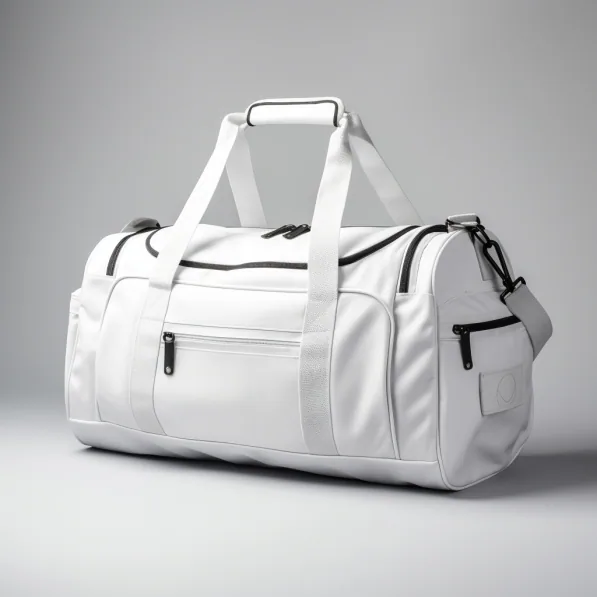
A camera bag carries the kit and protects it, at the cost of advertising that it holds camera gear. An insert protects the kit inside a bag the user already owns, at the cost of volume and of depending on the host. A cube organises and lightly cushions gear inside a larger bag, and is the right answer when the gear is rugged and the priority is packing rather than impact. Choose from the carrying case, not from the catalogue.
The three products sit next to each other on a retailer page and are bought for the same stated reason, which is to carry camera gear safely. They do three different jobs and the confusion costs buyers money in both directions: an insert bought to protect a 70-200 mm lens in a soft tote will not do it, and a dedicated camera bag bought for someone who wants one bag for work and weekends will be left at home. The decision is a carrying case, and there are only three questions that decide it.
The first question is whether the gear needs impact protection or only organisation. The second is whether the user is willing to advertise that they carry camera gear. The third is what the host bag is, if there is one. Those three answers pick the product, and everything else on the specification is downstream of them.
What Is a Camera Bag Actually For?
A dedicated camera bag does three things at once: it carries the load comfortably, it protects the contents from impact and weather, and it gives access to the gear without being set down. That combination is what the word means in a specification, and it is why a camera bag is heavier, stiffer and more expensive than an insert. The structure that makes it comfortable under 3 kg is the same structure that carries the impact load to the ground through the base.
The cost of that combination is appearance and flexibility. A camera bag reads as camera gear, which matters in some markets and in some streets, and it does one job. A buyer supplying a photography brand is usually specifying a dedicated bag; a buyer supplying a travel brand, a lifestyle brand or a corporate gifting programme is usually specifying an insert, because the end user already owns the host bag.
What Does an Insert Do That a Bag Does Not?
An insert separates protection from carrying. It puts 10 or 15 mm of padding and a divider system inside whatever bag the user already has, so the same insert works in a tote, a backpack or a holdall and the gear is protected in all three. For a buyer this is a smaller, lower-cost, more versatile product with a wider addressable market, and it is the faster-growing of the two categories for exactly that reason.
The dependency is the price of that versatility. The insert only performs as well as the host bag allows: it inherits the drop protection of the host, its weather resistance and the way it carries. An insert in a soft unstructured tote gives organisation and knock protection and nothing more, and a specification that promises otherwise will be tested by the first customer who sets the tote down on a wet pavement.
| Question | Camera bag | Insert | Cube |
|---|---|---|---|
| Impact protection | Designed and testable | Cushions; inherits the host drop behaviour | Separates only |
| Weather resistance | Shell, coating and closure designed together | Inherits the host; offers no shell | None |
| Access speed | Designed for it: side or top opening | Depends on the host opening | Depends on the host opening |
| Appearance | Reads as camera gear | Invisible | Invisible |
| Versatility | One job | Works in any host of the right size | Works in any host of the right size |
| Typical empty weight | 700-1,400 g | 200-500 g | 80-250 g |
| Typical build complexity | Highest: shell, frame, harness, closure | Medium: foam, dividers, lining | Lowest: fabric, light foam, zipper |
Where Does a Packing Cube Fit?
A cube is an organiser with a light foam or a padded base, and its job is to keep cables, batteries, filters and small bodies separated and findable. It is not a protection product and should not be specified as one. The padding in a cube is typically 3 to 5 mm of open or closed cell foam whose purpose is shape retention and a little cushioning, not impact absorption.
Where a cube is the right answer is where the gear is rugged and the risk is loss rather than breakage: a drone controller and its cables, a set of microphones, a lighting kit, a travel charger set. Specifying a cube for that job rather than an insert halves the cost and the weight, and it is the correct call. Specifying a cube for a 70-200 mm lens is not.
How Do the Three Compare on Cost and Build Complexity?
The three sit on a steep curve. A cube is a sewn fabric box with a zipper and a little foam: one pattern, few components, fast assembly, and the lowest unit cost of the three. An insert adds a foam build-up, a divider system with hook-and-loop, and a lining that has to be dimensioned on the interior; it is roughly two to three times the work of a cube. A dedicated camera bag adds a shell, a structured base, a harness, hardware and a weather closure, and is several times the work of an insert.
That curve matters to a programme because it sets where the money goes and what can go wrong. A cube has few failure modes and can be inspected quickly. An insert introduces foam density, compression set and divider attachment. A camera bag introduces all of those plus harness load paths, hardware corrosion and closure alignment. The inspection plan has to be built for the product that was specified, not for the category.
Which One Should a Programme Specify First?
Start from the end user and work backwards. If the customer of the buyer is a photographer, specify the bag. If that customer already owns a bag and wants to carry a camera sometimes, specify the insert. If that customer wants to organise accessories that are not fragile, specify the cube. The mistake is specifying the product the buyer finds easiest to make rather than the one the end user will actually carry.
There is a second consideration that is commercial rather than technical. A range rarely succeeds on one product. The common structure is a cube for accessories, an insert in two sizes for the camera, and a dedicated bag for the full kit, all sharing a shell fabric and a trim family so they read as one range. That structure gives three price points from one material development, and it is why the decision is rarely exclusive.
How Do the Inspection Plans Differ?
For a cube, the inspection is mostly dimensional and cosmetic: panel alignment, zipper run, stitch density, and the interior dimensions against the specification. For an insert, add foam thickness at stated points, foam density on a cut sample, divider positions and hook-and-loop engagement. For a camera bag, add harness attachment strength, hardware function and finish, closure alignment under load, and the base structure.
All three are inspected to the same sampling plan: AQL 2.5 under ISO 2859-1 at General Inspection Level II, with defects classified as critical, major and minor before the inspection starts. The class list is what differs between the three products, and writing it is part of specifying the product rather than an afterthought before shipment. A cube and a camera bag should not share a class list.
| Product | Camera bag | Insert | Cube |
|---|---|---|---|
| Primary dimension | Interior, at the foam surface | Interior, at the foam surface | Interior, at the lining |
| Padding | 10 mm closed-cell, stated density | 5, 10 or 15 mm, stated density | 3-5 mm, shape retention only |
| Structure | Base board, load path to the footprint | Self-supporting walls, no frame | None |
| Closure | Weather closure plus secondary retention | Lid or zipper, covered | Zipper |
| Hardware | D-rings, buckles, sliders, tested for corrosion | Optional D-rings | Slider only |
| Inspection focus | Harness, hardware, closure, base | Foam, dividers, dimensions | Dimensions, stitch density, zipper run |
| Typical failure | Harness root, closure burst | Divider peel, foam set | Seam slip, zipper jam |
What Does the Choice Do to MOQ, Sampling and Delivery?
The commercial windows are the same for all three: MOQ 500 pcs per style and colourway, sampling 6-10 working days from a signed-off tech pack, bulk production 35-50 days from written sample approval, inspection at AQL 2.5 under ISO 2859-1, payment T/T 30/70, quoted FOB Xiamen. What differs is what has to be locked in the tech pack before the sampling clock can start, and that is the real schedule risk.
A cube can be quoted and sampled from a dimension list. An insert needs the kit list and the interior layout, because the divider positions are specific to the gear. A camera bag needs both plus the harness and hardware decisions, and a hardware choice that has to be ordered in is the single most common cause of a sampling window that slips. Decide the hardware first, and the other two products stay on schedule.
How Does Weather Resistance Differ Across the Three?
Only a dedicated camera bag can be specified for weather, because weather resistance is a property of a closed system: shell fabric, coating, seam construction and closure have to be designed together. The shell is tested for resistance to water penetration under hydrostatic head in ISO 811 and for surface wetting under a spray test in ISO 4920, and the closure is the weak point in both, because a zipper line is a continuous gap in the shell no matter how good the fabric is.
An insert inherits whatever the host bag does and adds nothing of its own beyond a splash-resistant shell, so a specification that promises weather protection from an insert is a promise about a product the buyer does not control. A cube offers nothing at all and should not be sold into a weather claim. Where a programme needs weather performance and wants the insert approach, the answer is a rain cover carried in the insert lid, which is a separate component and a separate line on the bill of materials.
How Does Access Speed Compare?
Access is the reason professionals buy a dedicated bag and the reason the other two products exist. A camera bag is designed around an opening: a side panel that swings away from the body, a top opening that works while the bag is on one shoulder, or a rear panel that opens against the back. Each of those is a pattern decision with a cost, and a bag with a side access panel costs more to cut and sew than the same bag with a flap over a top opening.
An insert and a cube inherit the host opening, which means access is whatever the host gives and it is usually worse: the user opens the top of a tote and looks down into a bay. Where access matters, the insert can be improved with a lid that folds fully back and a bay layout that puts the body at the opening rather than under a lens, but that is a layout fix rather than an access feature, and it should be stated as one.
| Range position | Product | Typical padding | Typical empty weight | Role in the range |
|---|---|---|---|---|
| Entry | Cube | 3-5 mm, shape retention | 80-250 g | Accessory organisation, add-on sale |
| Middle | Insert, small and large | 10 mm, stated density | 200-500 g | Turns an existing bag into a camera bag |
| Top | Dedicated camera bag | 10-15 mm plus a structured base | 700-1,400 g | The full-kit product, weather and access |
| Shared across all three | Shell fabric, lining, trim colour, zipper family, puller shape | As specified per row | As specified per row | One material development, three price points |
Choosing between bag, insert and cube
- A bag carries, protects and gives access; it also reads as camera gear.
- An insert protects inside a host the user already owns, and inherits that host weaknesses.
- A cube organises and separates; it is not an impact product and should not be sold as one.
- Build complexity, and therefore inspection depth, rises steeply from cube to bag.
- Most ranges need all three at three price points sharing one trim family.
- Hardware selection is the most common cause of a slipped sampling window.
How Do You Keep the Three Products Consistent as One Range?
A range reads as one range through shared materials and shared dimensions, not through a shared logo. Fix one shell fabric and one lining across the three, fix the trim colour, fix the zipper family and the puller shape, and then let the padding and the structure do the differentiating. That approach keeps the material development cost down and it also keeps the colour matching problem down to one fabric.
The dimension side is where ranges usually drift. If the insert is sized to fit inside the bag, that relationship has to be dimensioned with a stated gap, not left to chance: an insert that fits the bag exactly will not go in once the lining has been sewn with a seam allowance. State the interior of the bag, the exterior of the insert, and the minimum gap, and check the first article against both.
Send the carrying case and the kit list
Send who will carry the product, what it has to hold and the target quantity. You get a product recommendation, indicative pricing and a sampling window within one business day.
Frequently Asked Questions
What is the difference between a camera bag and a camera insert?
A camera bag carries, protects and gives access on its own. An insert protects the gear inside a bag the user already owns and inherits that host bag weather and drop behaviour.
Is a packing cube enough to protect a camera?
No. A cube has 3 to 5 mm of foam for shape retention and separates accessories. It is the right product for cables and batteries, not for a body or a lens.
Can an insert be used on its own as a bag?
Yes, but it needs 15 mm walls, a padded lid, a reinforced handle and a base that does not deform when loaded. Most inserts are not built for that.
Which of the three is the least expensive to develop?
A cube: one pattern, few components, fast assembly. An insert is roughly two to three times the work, and a dedicated camera bag several times that.
Do all three use the same inspection standard?
All three are inspected at AQL 2.5 under ISO 2859-1 General Inspection Level II. What differs is the defect class list, which has to be written per product.
How do I size an insert to fit inside a specific bag?
Dimension the interior of the bag and the exterior of the insert and state a minimum gap of 10 mm per dimension, because the lining seam allowance eats into the opening.
Which product should a travel brand specify?
An insert, because the customer already owns a bag. Which product a photography brand specifies is a dedicated bag, because the customer wants access and weather protection.
Does an insert need weather resistance?
The insert inherits the weather behaviour of the host. Where weather matters, the shell fabric and the finish on the insert help with splash but not with a downpour.
What is the most common failure on a dedicated camera bag?
The harness root, where the strap meets the body, and the closure, which can burst in a corner drop. Both are checked in a pre-shipment inspection.
Can one shell fabric be used across all three products?
Yes, and it should be. One fabric and one trim family across a cube, an insert and a bag is what makes three products read as one range.
What is the MOQ for a mixed first order?
MOQ 500 pcs per style and colourway, so three products in one colourway is 1,500 pcs in total. A repeat programme can be discussed at 300 pcs per style.
Does product choice change the bulk lead time?
No. Bulk production is 35-50 days from written sample approval for all three. What changes is how long the specification takes to close, and hardware selection is the usual delay.
People Also Ask
Should I buy a camera bag or a camera insert?
An insert if the user already owns a bag they want to keep using; a dedicated bag if the user wants weather protection, fast access and a load-carrying harness.
What is a camera cube used for?
Organising and separating accessories that are not fragile: cables, batteries, filters, chargers and microphone kits.
Do camera inserts fit any bag?
They fit any host whose interior exceeds the insert exterior by about 10 mm per dimension. That gap has to be dimensioned, not assumed.
Is a camera insert as protective as a camera bag?
No. An insert cushions and separates; the impact behaviour comes from the host bag, which was usually not designed for a drop.
How much does a camera insert cost compared with a camera bag?
Materially less: fewer components, no harness, no structured base and no weather closure. The exact step depends on the padding thickness and the divider count.
Sources and further reading
Every figure on this page is either our own programme data or attributed below. Open the originals before you write them into a specification.
- ISO 2859-1:1999 — sampling procedures for inspection by attributesInternational Organization for Standardization
- ASTM D6193 — standard practice for stitches and seamsASTM International
- YKK fastening products — zipper specifications, sizes and careYKK Corporation