CA Proposition 65 for Bags: Chemicals, Warnings and Liability
Proposition 65 is a California statute about warnings and liability, not a product standard a bag passes or fails. It asks whether a listed chemical is present, whether exposure exceeds a level set for it, and whether a clear warning has been given. This page sets out how those three questions interact for soft goods.
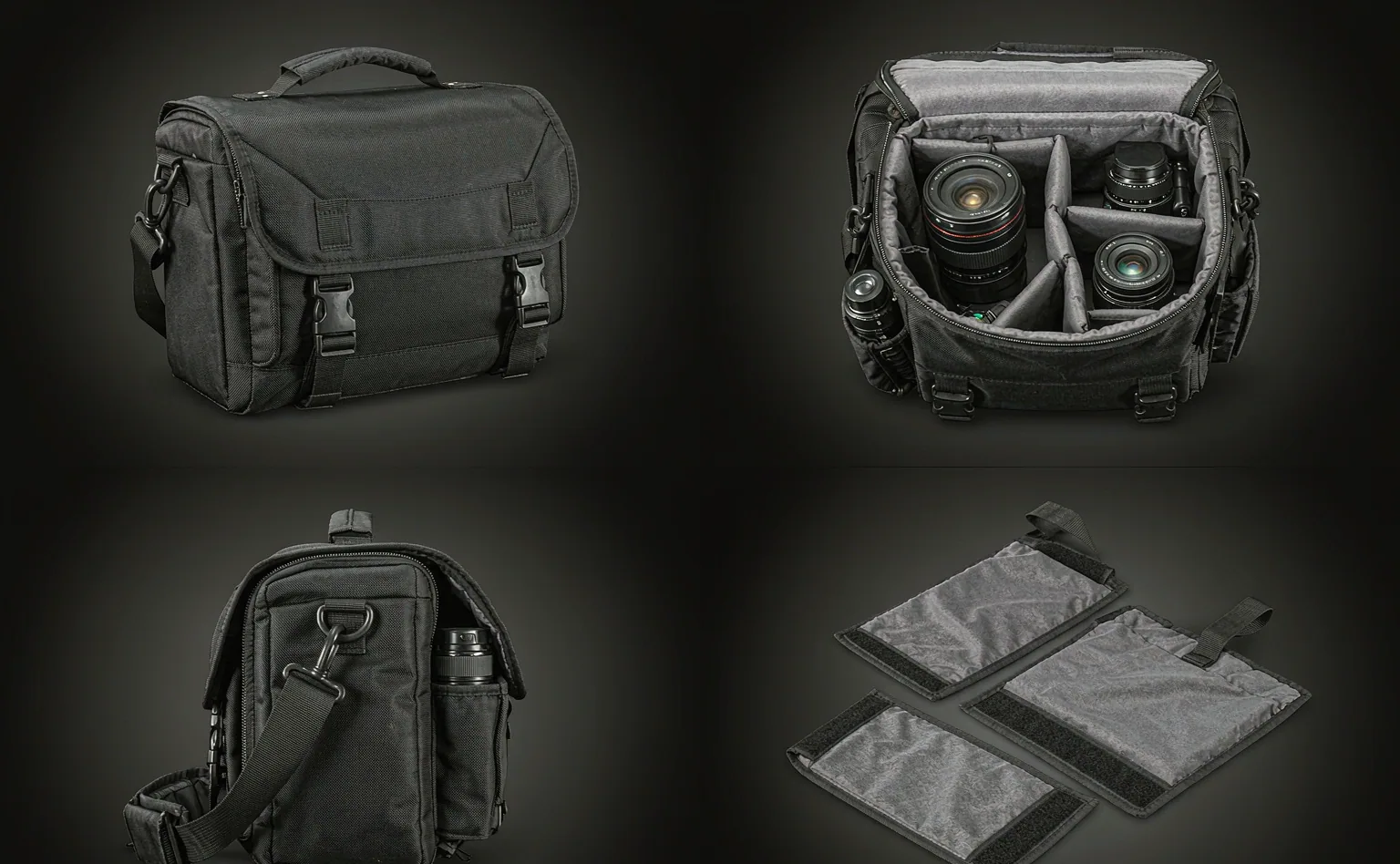
Proposition 65 turns on three questions in sequence: is a listed chemical present in the product, does the exposure it causes exceed the level set for that chemical, and if so has a clear and reasonable warning been given. A product can contain a listed chemical and still be lawfully sold with a warning, and it can contain none and need no warning at all. Limits, lists and thresholds change when a regulation is amended. Confirm every figure against the current official text before you rely on it, and ask your importer of record to confirm the version that applies in the destination market. MOQ 500 pcs, bulk 35-50 days.
What Kind of Law Is Proposition 65, Exactly?
It is a California state law, passed by ballot initiative, that requires the state to publish a list of chemicals known to cause cancer or reproductive harm, and that prohibits businesses from knowingly exposing people to a listed chemical without first giving a clear and reasonable warning. It is not a ban, and it is not a quality standard. A product containing a listed chemical is not prohibited; it has to be warned.
That structure is why "Prop 65 compliant" is a phrase that does not mean anything on its own. There is no pass mark a bag reaches. There is a list, an exposure question, and a warning obligation. A supplier statement that a product is compliant with the statute is a legal opinion rather than a test result, and it is worth reading as one.
Who Has to Comply and Who Carries the Exposure?
Any business whose product is sold in California and whose employees number above the small-business threshold in the statute. That includes the brand, the importer, the distributor and the retailer, and in practice the burden of demonstrating that no warning is needed falls on the party asserting it. The statute is also enforceable by private plaintiffs, which is why the volume of litigation around it is what it is.
The commercial implication for a bag programme is that liability does not stop at the factory gate. A brand selling into California carries its own exposure regardless of what an upstream party signed. That is why the sensible posture is to know what is in the product and to be able to show it, rather than to rely on a contractual indemnity that has to be enforced before it pays.
| Party in the chain | What the statute asks of it | Where the exposure sits | Practical posture |
|---|---|---|---|
| Brand selling in California | Do not expose without a warning | Direct, and the most visible target | Know the chemistry of the product |
| Importer of record | Same duty on the goods it places | Direct | Hold the test evidence for the article |
| Distributor | Same duty on goods it sells | Direct | Pass the evidence down and keep a copy |
| Retailer | Same duty, plus its own settlement history | Direct, and frequently the defendant of choice | Require the evidence at onboarding |
| Component maker | No statutory duty, but contractual exposure | Indirect, through indemnities | Supply named-substance declarations |
Which Chemicals Come Up in Soft-Goods Cases?
The published list runs to a very large number of substances, and the ones that matter to a bag are the ones plausible in its construction: certain metals and metal compounds in hardware, plating, pigments and stabilisers; certain plasticisers in flexible polymer; certain solvents and residues in coatings and adhesives; and certain dye-related substances in coloured cloth. Which of those are actually listed, and for which endpoint, is answered by the published list rather than by the material category.
This is the part buyers get wrong by analogy. A substance being famous does not put it on the list, and a substance being obscure does not keep it off. The only reliable method is to check the components of your construction against the current published list, then screen the plausible ones. Doing it the other way round — screening for a fixed panel because it is what last year's customer asked for — misses substances that were added to the list since.
How Is Exposure Assessed Rather Than Presence?
The statute is about exposure, not mere presence, so the analysis normally runs from a result in the material to an estimate of the dose a user would receive. For soft goods the routes considered are usually dermal contact and, for articles that could be mouthed, ingestion. Where a listed chemical is present below a level that has been established for it, no warning is required. Where no level has been established for that chemical and route, the analysis is different again.
The practical consequence is that a screening result alone does not answer the question. A result in parts per million in a fabric has to be carried through an exposure assumption before it says anything about a warning. Ask whoever performs the analysis to state the route and the assumption they used, because two competent reviewers can reach different conclusions from the same number.
A result in the material is an input to an exposure question, not an answer to it. Ask for the route, the assumption and the level the conclusion was reached against.
When Is a Warning Not Required?
Broadly, when exposure is below the level established for that chemical and route, when the business can show the exposure produces no significant risk for a carcinogen, or when the exposure is below the level set for a reproductive toxicant. The statute and its implementing regulations set out how those determinations are made, and the safe-harbour levels where they exist are published per chemical rather than as one number.
There is no single threshold to memorise, which is the single most useful thing to know about it. Each listed chemical that has a level has its own, and many have none. If a supplier quotes you one number as "the Prop 65 limit", the correct response is to ask which chemical and which route it applies to.

What Does a Compliant Warning Have to Say?
The implementing regulations prescribe the content and the method, including a warning symbol, specific wording, and a requirement that the warning be clear and reasonable — which means it must be conspicuous, readable and in the languages required for the retail environment. There are safe-harbour wording options published for different product types. Confirm the current prescribed wording against the official text, because the regulations have been amended.
Placement is a decision, not an afterthought. A warning buried on a shipping carton that the consumer never sees does not do the job; a warning on the product, on the hangtag or at the point of sale does, depending on how the product is sold. For online sales the warning has to appear before or during the purchase path, which is a web-team task rather than a packaging task.
Six things a warning decision depends on
- Which listed chemical is actually present, and at what level in the material.
- The route of exposure the assessment assumes.
- Whether a safe-harbour level exists for that chemical and route.
- The prescribed wording and symbol for the product type.
- Where the warning appears: product, hangtag, shelf, or online listing.
- Who owns the wording when the product is sold through a third party.
How Does Proposition 65 Differ From REACH and the Children's Product Rules?
REACH is a European Union chemicals regulation with restrictions and communication duties attached to articles and their importers. The federal children's product rules in the United States set substance limits and certification duties for products designed for children. Proposition 65 is a California warning-and-liability statute applicable to any consumer product sold there. Different trigger, different remedy, different evidence.
| Regime | What it regulates | Trigger | Remedy for failure | Evidence it needs |
|---|---|---|---|---|
| Proposition 65 | Warning and liability for listed chemicals in California | Presence plus exposure above the level for that chemical | Injunction, penalties, private settlements | Per-chemical results with an exposure conclusion |
| REACH | Chemicals placed on the European Union market | A restriction, an authorisation, or a candidate-list duty | Market withdrawal and enforcement by member states | Reports, declarations and a component list |
| Children's product rules | Lead, phthalates and certification for children's products | The product being a children's product | Recall, penalties, import refusal | Third-party testing and a children's product certificate |
| Brand restricted-substances list | A private contract requirement | Whatever the contract says | Contract remedy | Reports to the brand's own panel and limits |
What Should a Buyer Require From the Supply Chain?
Two things, in this order. First, a per-chemical screening result on the components that carry chemistry, with a method and a detection limit, drawn from the production lot. Second, a declaration from each component maker naming the substances it knows are present and those it has screened for. The combination lets your own reviewer reach an exposure conclusion rather than inheriting one.
Add a change-control requirement, because this is where programmes drift. If the hardware plater moves, if the coating changes, if the trim source changes, the screening result describes something that is no longer being made. Require notice of the change and re-screening when it happens, and record the date of the list version your screening was designed against.
| Component | What to require | Why | Frequency |
|---|---|---|---|
| Plated metal hardware | Screening for the listed metals relevant to plating and alloys | Hardware is the most common source of listed metals in soft goods | Per lot, or per plater change |
| Flexible polymer trim and film | Screening for listed plasticisers | Plasticisers concentrate in soft polymer | Per lot |
| Coated cloth | Screening plus coating declaration | Coatings carry solvents and additives | Per construction, re-check on change |
| Dyed cloth | Screening for listed dye-related substances | Dye chemistry varies by shade | Per colourway |
| Print and label stock | Declaration plus screen where plastisol is used | Pigments and binders carry their own chemistry | Per artwork change |
| Packaging | Declaration | Lower exposure, but still a product sold with the bag | Per packaging change |
How Do You Document the Position Defensibly?
Build a file that lets someone else reconstruct your conclusion three years later. That means the component list, the screening reports with method and detection limit, the declarations, the version and date of the list you screened against, the exposure conclusion with its route and assumption, and the warning decision with its wording and placement. If the conclusion was "no warning required", the reasoning belongs in the file as much as the result does.
Keep the file per style and per production lot rather than per supplier. A supplier-level file cannot answer a question about a specific shipment, and the question you will actually be asked is about a specific shipment. Consistency across reorders is what makes the file usable rather than decorative.

How Do Warnings Work When the Bag Is Sold Online?
The warning has to reach the buyer before or during the purchase path, which makes it a listing requirement rather than a packaging one. In practice that means the warning appears on the product detail page, and in some retail arrangements on the checkout page as well. A warning printed only on the polybag that the consumer never sees before delivery does not meet the requirement for a remote sale.
This is where programmes come unstuck, because the artwork was approved months earlier by a packaging team that had no brief from compliance, and the marketplace listing was built by an e-commerce team that never saw the screening report. The fix is procedural rather than technical: give the listing team the warning text at the same time as the product copy, and make the listing a controlled output of the compliance file rather than a separate workstream.
Marketplace operators add a second layer. Many run their own onboarding checks and will hold a listing until the documentation is supplied, which means the file you built for the statute is also the file you will submit to the channel. Building it once, per style and per lot, serves both purposes and avoids the situation where a warning is correct on the product and absent from the page that actually sold it.
What Should Go Into the Purchase Clause?
Name the chemicals, the method, and the consequence. A clause that requires screening for a named list of substances by a stated method on the production lot, requires the report to carry a detection limit, and makes the balance payment conditional on delivery of that report, gives you something to enforce. A clause that requires "compliance with applicable law" gives you an argument.
Add the warning-ownership sentence. State who decides whether a warning is required, who supplies the artwork, and who carries the cost if the decision changes after production. That sentence prevents the specific failure where goods are made, a warning obligation is identified late, and the cost of re-labelling lands on whoever is least able to absorb it.
Finally, state the trigger for re-screening in the same clause. A named list of substances, a stated method, and a requirement to re-screen on any change of dyehouse, coating, trim source, plater or artwork gives the clause a life beyond the first order. Without it, the first report is accurate once and then quietly stops describing what is being made.
Get the Prop 65 question answered before artwork is printed
Send the construction, the components and the sales channel, and our production team will tell you which components need screening and what the report has to carry, before the hangtag artwork is committed. MOQ 500 pcs, sampling 6-10 working days, bulk 35-50 days from sample approval, FOB Xiamen.
Frequently Asked Questions
Is Proposition 65 a product standard my bag can pass?
No. It is a California statute requiring a warning before exposure to a listed chemical, with liability for failure. There is no pass mark; there is a list, an exposure question and a warning obligation.
What does "Prop 65 compliant" actually mean?
Very little as a standalone phrase. Ask what it means in the specific case: which chemicals were screened, what the results were, and whether a warning was required and given.
Who is liable if a bag sold in California carries a listed chemical without a warning?
Every business in the chain that exposed people to it, including the brand, the importer, the distributor and the retailer. The statute is also enforceable by private plaintiffs.
Is there a single Prop 65 limit I can design to?
No. Safe-harbour levels, where they exist, are published per chemical and per route of exposure. Many listed chemicals have no established level at all.
Which components of a bag most often carry listed chemicals?
Plated metal hardware, flexible polymer trim and film, coated cloth, and printed panels. Dye chemistry varies by shade, so colourway matters.
Do I need a warning if a listed chemical is present?
Not necessarily. The question is whether the exposure exceeds the level set for that chemical and route. Presence is an input to that question, not the answer to it.
What must a compliant warning say?
The implementing regulations prescribe the wording, the symbol and the method. Confirm the current prescribed wording against the official text, because the regulations have been amended.
Where does the warning have to appear?
Where it is clear and reasonable for how the product is sold: on the product, on the hangtag, at the point of sale, or on the online listing before or during the purchase path.
How is Proposition 65 different from REACH?
REACH is a European Union chemicals regulation with restriction, authorisation and candidate-list duties. Proposition 65 is a California warning-and-liability statute. Different trigger and evidence.
Can one test report cover both regimes?
Sometimes, where the substances and the methods overlap. The decision about which regime applies is made by the market, not by the laboratory, so check the limits separately.
How often should screening be repeated?
Per production lot for the components that carry chemistry, and whenever a component source, coating, plater or artwork changes.
What should the file contain?
The component list, the reports with method and detection limit, the declarations, the list version screened against, the exposure conclusion with its assumption, and the warning decision.
People Also Ask
What is California Proposition 65?
A California statute requiring a clear warning before knowingly exposing people to a chemical on the state's published list.
Is there a Prop 65 limit for bags?
No single one. Levels, where they exist, are published per chemical and per route of exposure.
Who enforces Proposition 65?
The state, and private plaintiffs acting in the public interest, which is why litigation volume is high.
Do I need a Prop 65 warning on a bag?
Only if a listed chemical is present and the exposure exceeds the level set for it. Presence alone does not decide it.
What should I ask a supplier for?
Per-chemical screening results with method and detection limit on the production lot, plus declarations naming substances rather than adjectives.
Sources and further reading
Every figure on this page is either our own programme data or attributed below. Open the originals before you write them into a specification.
- Proposition 65 in plain languageCalifornia Office of Environmental Health Hazard Assessment
- The Proposition 65 list of chemicalsCalifornia Office of Environmental Health Hazard Assessment
- Restricted substances under REACH (Annex XVII)European Chemicals Agency