Bag Tech Pack vs Sketch: Why Factories Need Both
A sketch tells the production team what the buyer wants the bag to convey; a tech pack tells them what to cut, stitch and fit. Send either alone and the gap is filled with assumptions, and every assumption is priced and then corrected at the buyer's cost.
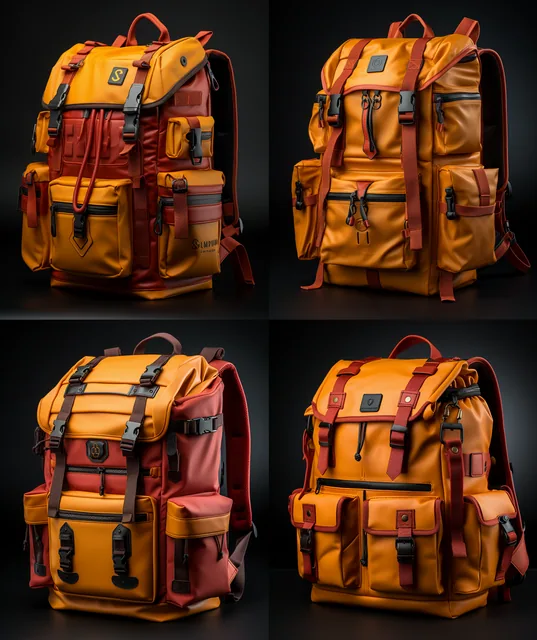
A sketch and a tech pack do two different jobs and neither replaces the other. The sketch carries proportion, silhouette and intent, and it is what a designer signs. The pack carries dimensions, materials, stitch schedule, hardware and testing, and it is what a production team builds from. Link them with numbered callouts so every balloon on the sketch points at a line in the pack.
The argument for sending both is not tidiness. It is that the two documents fail in different directions. A pack with no sketch is buildable and lifeless: every field can be filled correctly and the bag still comes out looking wrong, because proportion is not a field. A sketch with no pack is full of intent and unbuildable, because there is nothing to cut.
What buyers actually send, most of the time, is a photograph of a competitor's product with a note about the logo. That is neither document. It produces a sample that is approximately right, a price that is approximately right, and a second sample that costs another 6-10 working days.
The fix is not a longer pack. It is two documents that admit they do different jobs: one that says what the bag is for and one that says what it is made of. Buyers who adopt the discipline usually find it pays for itself on the first style, because the second sample stops happening and the price stops moving.
What Does a Sketch Carry That a Tech Pack Cannot?
Proportion and intent. The relationship between the height of the body and the depth of the gusset, the way a strap meets the top of the panel, the visual weight of a trim line — none of these is a dimension and all of them are what the customer sees. A pack can state that a panel is 240 mm by 180 mm and still never say whether the bag reads as tall or as squat.
The second thing a sketch carries is the decision about what not to build. A designer's drawing shows the two or three features that matter and quietly omits the rest; that omission is a decision, and it is lost the moment somebody tries to reconstruct intent from a materials list.
What Does a Tech Pack Carry That a Sketch Cannot?
Everything that costs money. The sketch cannot say which mill supplies the shell, what the seam allowance is, how many stitches per inch close the gusset, what pull the side-release buckle has to survive, or what the carton count is. Those are the values the quotation is arithmetic on, and none of them is drawable.
The sketch also cannot carry what a laboratory can test. A claim that the fabric meets a colourfastness grade, that a weld holds, or that a component is inside a restricted-substance limit has to be written as a standard number and a limit. A drawing of the same claim is a picture of a bag.
| Question | Answered by the sketch | Answered by the pack | Answered by neither |
|---|---|---|---|
| How tall should it look? | Yes | Only as a number | |
| Where does the strap sit on the panel? | Yes, as proportion | Yes, as a dimension from a seam | |
| What is the shell fabric? | Only as a colour and texture | Yes, with mill, weight and finish | |
| How many stitches per inch? | No | Yes | |
| What pull must the buckle survive? | No | Yes, in newtons | |
| What is the carton count? | No | Yes | |
| Does the colour match last season? | Only by eye | Yes, against an approved swatch number | |
| How much will it cost? | No | Indirectly, through the BOM | |
| Is the proportion right for the customer? | Yes | No | Neither — that is a market decision |
How Do Numbered Callouts Join the Two Documents?
By giving every component on the sketch a balloon number and every line in the materials and hardware schedules the same number. The sketch then points at the pack and the pack points back. A production team reading the pair never has to guess which buckle the drawing means, and a buyer reviewing a sample can say "callout 7 is wrong" rather than "the buckle".
Keep the numbers stable across revisions. Once callout 7 has meant the side-release buckle in two revisions it must keep meaning that, even if the buckle moves position on the drawing. Renumbering callouts between revisions is the fastest way to make an old email thread dangerous.
Linking the sketch to the pack
- One balloon per component on the sketch, numbered clockwise from the top left.
- The same number in the first column of the materials and hardware schedules.
- Callout numbers that never change meaning across revisions.
- A revision note that says which callouts changed and why.
- The sketch filed inside the pack rather than attached to an email about it.
- A note on the sketch where a dimension on the pack overrides the drawing, for example "dimension per pack, not to scale".
- A mark on the sketch showing the proportion that is not negotiable, so it is not treated as one more adjustable number.
What Happens When Only the Sketch Is Sent?
The production team fills the gaps with what it has on the shelf, and the sample that comes back is a reasonable bag that is not the buyer's bag. The shell is a stock 600D rather than the coated cloth the buyer imagined; the binding is 20 mm rather than 25 mm; the hardware is what the line uses every day. Every one of those is a correct answer to a question that was never asked.
The price that comes back with that sample is then wrong in a specific and awkward way. It is not inflated — it is a price for a different product. When the buyer says "no, I wanted a coated shell", the price moves, and the move reads as a change of mind rather than as the correction it actually is.
There is a second cost that lands later. The stock components chosen to fill the gaps are the ones already on the shelf, which means they are the ones already used on somebody else's programme. Where the buyer then approves that sample and goes to bulk, the bag inherits a bill of materials nobody selected on purpose.
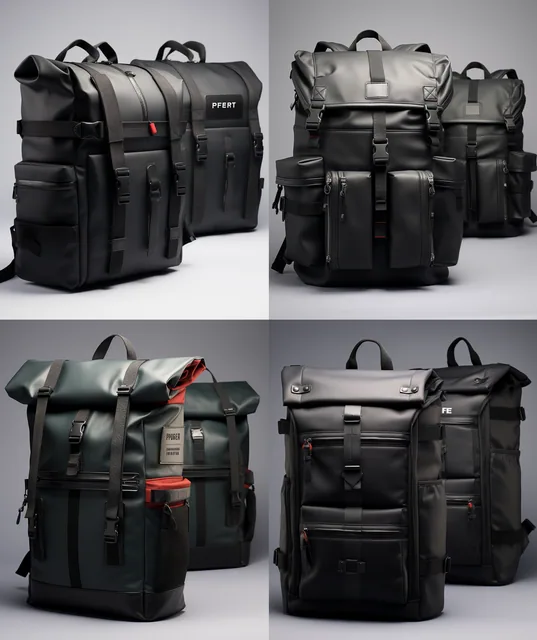
What Happens When Only the Tech Pack Is Sent?
Something subtler and, on a complicated style, worse. Every field is filled and every dimension is right, and the bag still comes out wrong, because proportion is not a field and the pack never said what the silhouette was meant to be. The panels are the specified size and the shape is not the one in the buyer's head.
This is also where a camera bag programme tends to hurt. A divider set can be specified to the millimetre and still leave a body-and-two-lens kit sitting proud of the top edge, because the proportion between the interior height and the divider height was never drawn. The numbers were right and the bag does not work.
This failure is expensive to fix because it is hard to describe. A wrong dimension can be corrected in writing. A wrong proportion produces a conversation in adjectives — too tall, too soft, too busy — and each round of adjectives costs another sample.
| Failure | Cause | How it shows up | Cost |
|---|---|---|---|
| Wrong component | The pack left a field blank | The sample has a different buckle or a different foam | One correction, one sample |
| Wrong dimension | Unit or measurement method missing | The bag is 15 mm short | One correction, one sample |
| Wrong proportion | No sketch, or the sketch was not to scale | The bag is right and reads wrong | Two or three correction rounds, each a sample |
| Wrong hand | No physical reference for the shell | The cloth is correct on paper and wrong in the hand | A material resubmission |
| Wrong intent | The buyer never said what the bag was for | The bag is well made and unusable for the kit | A new first sample |
When Is a Sketch Enough and When Is It Not?
A sketch is enough for a conversation and not enough for a quotation. It is the right artefact for the first twenty minutes: is this the shape, is this the proportion, is this the customer. It stops being enough the moment somebody asks what it costs, because cost is arithmetic on fields that a sketch does not have.
There is one narrow case where a sketch and a sample are enough: an exact repeat of a style already in the file, where the pack exists from the previous run and the only change is a colourway. Even then, the repeat is issued against the old pack with a new revision letter rather than against the sketch.
How Do the Two Documents Behave on a Repeat Order?
Better than they did first time, provided the pair was filed properly. A repeat runs against the existing pack with a new revision letter and, where nothing about the shape has changed, without a new sketch. The golden sample from the previous run is the reference for colour and hand, and the pack already carries the mill, the shade reference and the stitch schedule.
What breaks a repeat is a silent change on either side. A mill substitution on the shell, a different foam supplier, or a hardware part bought from a second source all move the bag away from the approved pair without changing a single line of either document. Where a programme intends to repeat, the pack should state which components are single-source and what approval is needed to change one.
| Repeat scenario | Sketch needed again? | Pack action | Risk if skipped |
|---|---|---|---|
| Same style, new colourway | No | New revision, colourway matrix updated | A trim component ships in the old colour |
| Same style, new quantity | No | Confirm MOQ and the material lead time | A component runs short mid-run |
| Same style, new mill for the shell | No | New revision, new material line, new golden sample | The hand and the shade drift |
| New hardware source | No | New revision with the pull figure re-tested | A buckle that passes the eye and fails in use |
| Changed silhouette | Yes | New style code, new pack | The old revision letter is reused for a different bag |
| Changed capacity | Yes, as a section | New drawing, new dimensions | The interior no longer fits the kit |
What Does a Good Sketch Actually Show?
Four views at a stated scale, with the strap and the trim drawn rather than described, and a note of what the bag carries. That last item is the one buyers omit and the one that changes the drawing: a kit bag drawn around wet kit needs a drained base, and the same bag drawn around dry kit does not.
The sketch should also mark what is not negotiable. If the proportion of the body to the gusset is the whole point of the design, mark it, because a production team reading a drawing without that mark will treat every dimension as equally adjustable and will happily produce a bag that satisfies all of them and none of the intent. One marked proportion on a drawing is worth a page of written explanation, because it survives being read by somebody who does not speak the buyer's language.
How Should the Two Documents Be Filed and Sent?
As one file, in one email, with the sketch inside the pack. A pack sent as a PDF and a sketch sent as an image in a separate message get separated within a day, and from that point the production team is building from half a specification. One file, one revision letter, one date.
Then hold the pair steady through the programme. Sampling runs 6-10 working days from the signed pair, bulk runs 35-50 days from written sample approval, and inspection runs at AQL 2.5 under ISO 2859-1. Where a dispute arises about what was specified, the pair together is the evidence; either alone is half of it. The reorder consistency note covers what happens when the pair drifts between runs.

Send the pair and get one marked-up answer
Send the sketch and the pack together. You get one list of what the sketch must state and what the pack must add before sampling starts.
Frequently Asked Questions
Is a sketch the same as a tech pack?
No. The sketch carries proportion and intent; the pack carries dimensions, materials, stitch schedule, hardware and testing. One is what the designer signs, the other is what the production team builds from.
Can I get a quotation from a sketch alone?
You can get a number, but it is a number for a different product. The gaps get filled with stock components, and the price moves when you correct them.
Can a tech pack replace a sketch?
Not on a style where proportion matters. Every field can be correct and the silhouette still wrong, and a wrong proportion costs more to fix than a wrong dimension because it is hard to describe.
What is a callout on a bag drawing?
A numbered balloon pointing at a component, matched to the same number in the materials or hardware schedule. It joins the two documents so nobody has to guess which part the drawing means.
Should callout numbers change between revisions?
No. Once callout 7 means the side-release buckle it keeps meaning that, even if the buckle moves. Renumbering makes old email threads dangerous.
What file format should the sketch be in?
Whatever the designer works in, exported to a page inside the pack PDF. If the sketch is not to scale, write that on it, because somebody will measure off it otherwise.
What if the sketch and the pack disagree?
The pack wins on anything with a number, and it should say so. Put a note on the sketch reading "dimensions per pack, not to scale".
Do I need a sketch for a repeat order?
Usually not — a repeat runs against the existing pack with a new revision letter. Where the repeat changes the silhouette rather than the colourway, it is a new style and needs both documents again.
How do I describe a proportion problem without adjectives?
Measure it. If the bag reads too tall, state the ratio of body height to base depth you want instead, and give the number rather than the word.
Does the sketch need dimensions on it?
No, and it is better without them. Dimensions belong in the pack where they carry a tolerance and a measurement method; a dimension on a sketch invites somebody to scale the drawing.
Who owns the sketch in a dispute?
The buyer, in the sense that the buyer approves it. What matters is that the approved sketch carries the same revision letter as the pack it was approved with.
How long does sampling take once both are sent?
6-10 working days from sign-off of the complete pair, widening to 12-15 working days on a complex style with welded seams or multi-panel foam.
Does a repeat order need the sketch again?
Only where the shape or the capacity changes. A same-style repeat runs against the existing pack with a new revision letter and the previous golden sample as the reference.
What breaks a repeat order silently?
A mill substitution, a different foam supplier or a second hardware source. None of them changes a line of either document, and all of them move the bag away from what was approved.
What should a sketch show besides the shape?
Four views at a stated scale, the strap and trim drawn rather than described, a note of what the bag carries, and a mark on the proportion that is not negotiable.
People Also Ask
What is the difference between a tech pack and a sketch?
The sketch shows proportion and intent; the pack states dimensions, materials, stitch schedule, hardware and testing. Production needs both because neither carries what the other does.
Can a factory make a bag from a sketch?
It can make a bag, and it will fill every unspecified field with a stock component. That produces a reasonable sample that is not the buyer's product.
What is a callout on a tech pack?
A numbered balloon on the drawing matched to the same number in the materials and hardware schedules, so the two documents cross-reference each other.
Do I need both documents for a quotation?
For a quotation you can hold anybody to, yes. The sketch alone gives a price for a different product, and the pack alone gives a price that ignores proportion.
How should the sketch and pack be sent?
As one file with the sketch inside the pack, one revision letter and one date. Separate attachments get separated within a day.
Sources and further reading
Every figure on this page is either our own programme data or attributed below. Open the originals before you write them into a specification.
- ASTM D6193 — Standard Practice for Stitches and SeamsASTM International
- ISO 2859-1:1999 — Sampling procedures for inspection by attributesInternational Organization for Standardization
- AATCC technical manual — colourfastness and appearance methodsAmerican Association of Textile Chemists and Colorists