AZO Dyes in Bags: The Restriction and How to Test
The restriction on azo colourants does not ban a dye class by name. It bans the release of certain aromatic amines above a limit, from textile and leather that can come into contact with skin. This page sets out what the test actually measures, how to scope it across colourways, and what a report has to show.
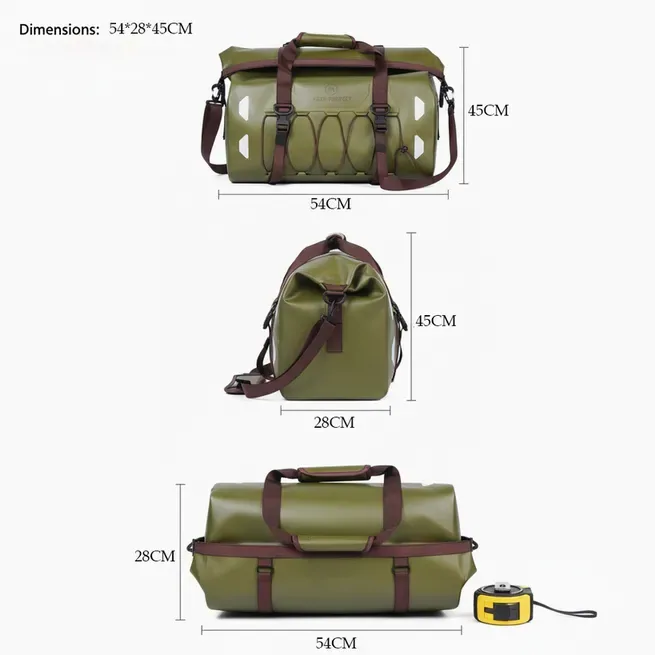
The restriction works by cleavage rather than by name: a colourant that can release one of the listed aromatic amines above the limit is restricted, whatever it is called commercially. The test is a reduction followed by an analysis for the listed amines, run on the dyed material. Scope it per material and per colourway. Limits, lists and thresholds change when a regulation is amended. Confirm every figure against the current official text before you rely on it, and ask your importer of record to confirm the version that applies in the destination market. MOQ 500 pcs, sampling 6-10 working days, bulk 35-50 days.
What Are Azo Colourants and Why Are They Restricted?
Azo colourants are a large family of synthetic dyes built around an azo linkage, and they account for a substantial share of the colours used on textile. The concern is not the dye as sold but what it can release: certain azo linkages can be cleaved under reducing conditions to give aromatic amines, and some of those amines are classified as carcinogenic. The restriction is written against the release of those amines rather than against the dye family.
That distinction drives everything downstream. A mill cannot answer the question by naming the dyes it bought, because two products with the same commercial name can behave differently, and because the release depends on the dyeing process as well as on the dye. The only way to answer it is the test.
What Exactly Does the Restriction Say?
In the European Union the restriction is in the annex of the chemicals regulation that lists restricted substances, and it applies to textile and leather articles that may come into direct and prolonged contact with the skin or the oral cavity. It sets a limit for each listed aromatic amine, expressed in milligrams per kilogram of the material, and the limit sits in the tens of milligrams per kilogram rather than in percentages. Confirm the current list and the current limit against the official text before you design to either.
The contact condition is worth reading carefully, because it defines the scope. A bag body that a user handles is plainly in contact. An internal layer that nothing touches is a different question, and a component such as a lining inside a closed compartment sits somewhere in between. Where a programme sells in several markets, the conservative route is to test the dyed materials regardless of the contact argument, because the cost of the test is small against the cost of being wrong.
| Element | What the restriction does | What it does not do | Consequence for a bag programme |
|---|---|---|---|
| Basis | Limits the release of listed aromatic amines | Does not ban the azo dye family by name | Name-based dye declarations cannot answer the question |
| Level | A limit per amine, in the tens of milligrams per kilogram | Not a percentage, and not one number for all amines | Read the result amine by amine |
| Scope | Textile and leather that can contact skin | Not hardware, not foam, not polymer trim | Screen cloth and leather; screen other materials under other rules |
| Method | A cleavage procedure followed by analysis for the amines | Not a visual or a dye-name check | Ask for the method on the report |
| Market | Set by the jurisdiction | Not a global standard | Check the importing country's own requirement |
Which Materials on a Bag Are Covered?
Dyed textile and dyed leather, which on a bag means the shell, the lining, webbing and tape that have been through a dye bath, and any leather or coated split used on trim or panels. Undyed material, solution-dyed synthetic where no conventional dye bath is used, and non-textile components are outside this specific restriction — though they are not outside chemical screening generally.
Print is the grey area worth deciding deliberately. A printed panel applies pigments in a binder rather than dyeing the fibre, so the restriction as written may not reach it, but the pigments themselves carry their own chemistry and many brand restricted-substances lists screen print separately. Decide the position in writing rather than leaving it to whoever commissions the test.
Which components have been through a dye bath? That single question produces the correct test scope and stops the common failure of screening the shell and calling the bag screened.
How Is the Test Actually Performed?
The sample is treated under reducing conditions to cleave any azo linkages present, and the resulting solution is analysed for the listed aromatic amines, normally by chromatography with mass spectrometric or equivalent detection. The result is reported per amine, with a detection limit, and the report should name the method used. Ask for the method and the detection limit on every report, because a result without them cannot be compared against a limit.
Two practical points follow from the chemistry. The test is destructive and it is run on a small sample, so the sample has to be representative of the lot. And because the result depends on the dyeing process as much as the dye, a report on a laboratory-dyed sample does not describe a production lot dyed elsewhere. Sample from production.
How Do You Scope the Test Across Colourways?
Per colourway, because shade is the variable that changes the dye recipe. A style offered in six colourways is six tests on the dyed material, and testing one dark shade as a proxy for the range is the single most common scoping error in this area. A deep navy and a pale grey of the same base cloth can use entirely different dye packages.
The cost of this is real, and there are two legitimate ways to manage it. The first is to group colourways that genuinely share a dye recipe and to have the mill confirm that in writing. The second is to screen the darkest and the most saturated shade in each dye family and to record the reasoning. Both are defensible if they are written down; neither is defensible if the decision was made on cost alone and nobody recorded it.
Six rules for scoping an azo screen
- List every component that has been through a dye bath.
- Treat each colourway as a separate test unless the recipe is shared in writing.
- Sample from the production lot, not from a laboratory dyeing.
- Require the method and the detection limit on the report.
- Read the result per amine rather than as one pass or fail.
- Re-test whenever the dyehouse, the recipe or the shade changes.
What Does a Report Have to Show?
The material tested, identified well enough to tie it to your component list; the colourway; the lot or the reference the sample came from; the method used; each listed amine with a result and a detection limit; and the laboratory, with its accreditation stated. Those six fields are what make a report usable, and a report missing any of them will be rejected by most retailer compliance reviewers.
| Report field | Why it is there | What a missing field means |
|---|---|---|
| Material identification | Ties the result to a component | The result cannot be applied to your construction |
| Colourway | Dye recipes differ by shade | The result covers one shade only |
| Lot or sample reference | Ties the result to production | The result may describe a laboratory sample |
| Method | Defines how cleavage and analysis were done | The result cannot be compared with a limit set for a method |
| Result per amine with detection limit | Limits are set per amine | A pass or fail statement carries no information |
| Laboratory and accreditation | Establishes competence | The result may not be accepted by a third party |
Where Do Azo Failures Actually Come From?
From the dyehouse rather than from the cloth. Most failures trace to a dye package chosen for shade, fastness or cost without anyone checking its cleavage behaviour, or to a recipe that was compliant and then adjusted on the floor to hit a shade. Both are process failures, and both are invisible to a buyer who only reads the final report.
The controls that work are therefore process controls: a dyehouse that screens its recipes, a written undertaking that the recipe will not be changed without notice, and a re-test when the shade or the dyehouse changes. Ask which dyehouse will run the lot and whether it holds current screening for the recipes it runs, in the same breath as you ask about the cloth.
How Does This Relate to Other Substance Rules?
It sits inside the chemicals regulation as one restriction among many, and it overlaps with brand restricted-substances lists and with certification systems that screen for the same amines. The practical consequence is that one screen can serve several masters, provided the method and the list match. Where a brand list covers more amines than the legal restriction, scope the test to the wider list and read it against both.
It is also worth keeping separate from the recycled-content and substance-certification files. A certificate under a substance-testing system may screen for these amines, but it is issued for an article and a period, whereas a restriction is a legal duty attaching to what you place on the market. Holding one does not discharge the other, and the evidence is different in kind.
What Should the Specification Say?
Name the materials, the colourways and the method. A clause that requires screening for the listed amines, by a stated method, on every dyed textile component, in every colourway offered, with the report carrying a detection limit per amine, is enforceable and produces the right scope. A clause that requires goods to be free of banned dyes is neither.
Add the change-control sentence, and make it specific to the dyehouse. Require the name of the dyehouse for each lot, require notice before it changes, and require re-screening when it does or when the recipe is adjusted to hit a shade. That is the clause that prevents the common failure, which is a compliant first lot and an untested second one made with a recipe nobody screened.
How Does the Result Interact With a Brand Restricted-Substances List?
Brand lists frequently cover more amines than the legal restriction, and sometimes set lower values. Where that is the case, scope the test to the wider list rather than running two screens, because the additional amines cost very little once the sample is in the laboratory and the method is running. One report read against two requirements is the efficient outcome.
The thing to check is that the method matches. A brand list may specify its own extraction or analysis conditions, and a result obtained under different conditions is not automatically acceptable against it. Ask the laboratory to confirm that the method used satisfies both the legal restriction and the brand list before the sample is run, rather than discovering a mismatch when the report is reviewed.
What Does a Non-Conforming Result Mean Commercially?
It means the material cannot be used for the goods as specified, and the options depend entirely on when it was found. Found at material arrival, the options are re-washing, re-sourcing the cloth, or a documented decision to accept against a risk assessment. Found after the goods are assembled, the options are withdrawal or a documented acceptance, and neither is comfortable.
That asymmetry is the whole argument for sampling early. The test is the same test and the result is the same result; what changes is the set of things you can still do about it. Put the sampling point in the calendar at material arrival and the non-conforming case stays a material problem, which is a much smaller problem than a finished-goods one.
Where a non-conforming result is found, ask for the dye recipe and the dyehouse rather than for a re-test. The re-test tells you the same thing again; the recipe tells you why. Most non-conforming results trace to a specific package or a specific adjustment, and knowing which one is what prevents it happening on the next lot.
How Does This Fit the Production Calendar?
Screening runs on the production lot, which means it can be commissioned during bulk rather than after it. Draw the sample when the dyed cloth arrives at the assembly site, send it, and the result is normally back well inside the 35-50 day window. That is the clean sequencing, and it means the file is complete before packing.
The other route — screening after the goods are made — works too, but it means the result arrives after the goods are ready, so a non-conforming result is a finished-goods problem rather than a material problem. Sampling early turns the same result into a decision that can still be acted on, which is the whole argument for putting it in the calendar at material arrival.
Where a programme runs several styles from the same dyed cloth, screen the cloth rather than each style. One result on the material covers every style cut from it, provided the components and the colourway are the same. That is the legitimate way to keep the number of tests proportionate, and it rests on the bill of materials being accurate about which styles share which material.
Get the azo screen scoped by colourway, not by style
Send the construction and the colourway list, and our production team will tell you which components have been through a dye bath, how many tests that actually needs, and where the sampling sits in the production calendar. MOQ 500 pcs, sampling 6-10 working days, bulk 35-50 days from sample approval, FOB Xiamen.
Frequently Asked Questions
Does the restriction ban all azo dyes?
No. It restricts the release of listed aromatic amines above the limit from textile and leather that can contact skin. It is written against cleavage products, not against the dye family by name.
What is the limit?
A limit per listed amine, expressed in milligrams per kilogram of material, in the tens of milligrams per kilogram rather than as a percentage. Confirm the current figure against the official text.
Which components of a bag have to be screened?
Dyed textile and dyed leather: shell, lining, dyed webbing and tape, and any leather or coated split trim. Hardware, foam and polymer trim are outside this restriction but not outside screening generally.
Do I have to test every colourway?
Each colourway is a separate test unless the dye recipe is genuinely shared and the mill confirms that in writing. Shade is the variable that changes the recipe.
What method is used?
A cleavage procedure under reducing conditions followed by analysis for the listed amines. Ask for the method and the detection limit on the report.
Can I rely on a mill declaration instead?
Not for the restriction itself. The result depends on the process as well as the dye, so only the test answers it. A declaration is useful for components outside the restriction.
Does a printed panel fall inside the restriction?
Print applies pigments in a binder rather than dyeing the fibre, so the position is arguable. Decide it in writing and screen print separately where brand lists require it.
What should the report show?
Material, colourway, lot reference, method, each amine with a result and detection limit, and the laboratory with its accreditation.
How often should screening be repeated?
Per production lot, and whenever the dyehouse, the recipe or the shade changes. Recipe adjustment on the floor to hit a shade is a common cause of failure.
Does certification under a substance system replace this?
No. A certificate is issued for an article and a period; the restriction is a legal duty attaching to what you place on the market. They are different in kind.
When should the sample be drawn?
When the dyed cloth arrives at the assembly site, so the result lands during bulk and a non-conforming result is still a material decision rather than a finished-goods one.
Can one screen serve a brand list and the legal restriction?
Yes, where the methods and lists match. Scope to the wider list and read the result against both.
People Also Ask
What is the azo dye restriction?
A restriction on the release of listed aromatic amines above a limit from dyed textile and leather that can contact skin.
Which materials does it cover?
Dyed textile and dyed leather: shell, lining, dyed webbing and tape, and leather or coated split trim.
How is the test performed?
A cleavage procedure under reducing conditions followed by analysis for the listed amines, reported per amine with a detection limit.
Do I need to test every colourway?
Yes, unless the dye recipe is genuinely shared and confirmed in writing. Shade changes the recipe.
What causes most azo failures?
A dye package chosen without checking its cleavage behaviour, or a recipe adjusted on the floor to hit a shade.
Sources and further reading
Every figure on this page is either our own programme data or attributed below. Open the originals before you write them into a specification.